The Scale of Honda's EV Sales Slump
Honda has a problem that's becoming impossible to ignore. The Japanese automaker — famous for reliable sedans and class-leading engines — is watching its electric vehicle ambitions sputter just as the rest of the world accelerates. While rivals pile up orders for battery-powered cars, Honda's EV lineup sits on dealer lots. The message from buyers has been blunt: the cars aren't competitive enough, and they aren't selling.
The numbers paint an uncomfortable picture. Across the company's key markets in North America, Europe, and even its home turf of Japan, dedicated EV sales have been sliding quarter after quarter. Honda's global EV market share sits stubbornly below one percent, a rounding error in a segment where Tesla and China's BYD are shipping hundreds of thousands of units. The Honda e, a cute but range-limited city car, became a niche curiosity rather than a volume play. The e:Ny1 crossover hasn't fared much better.
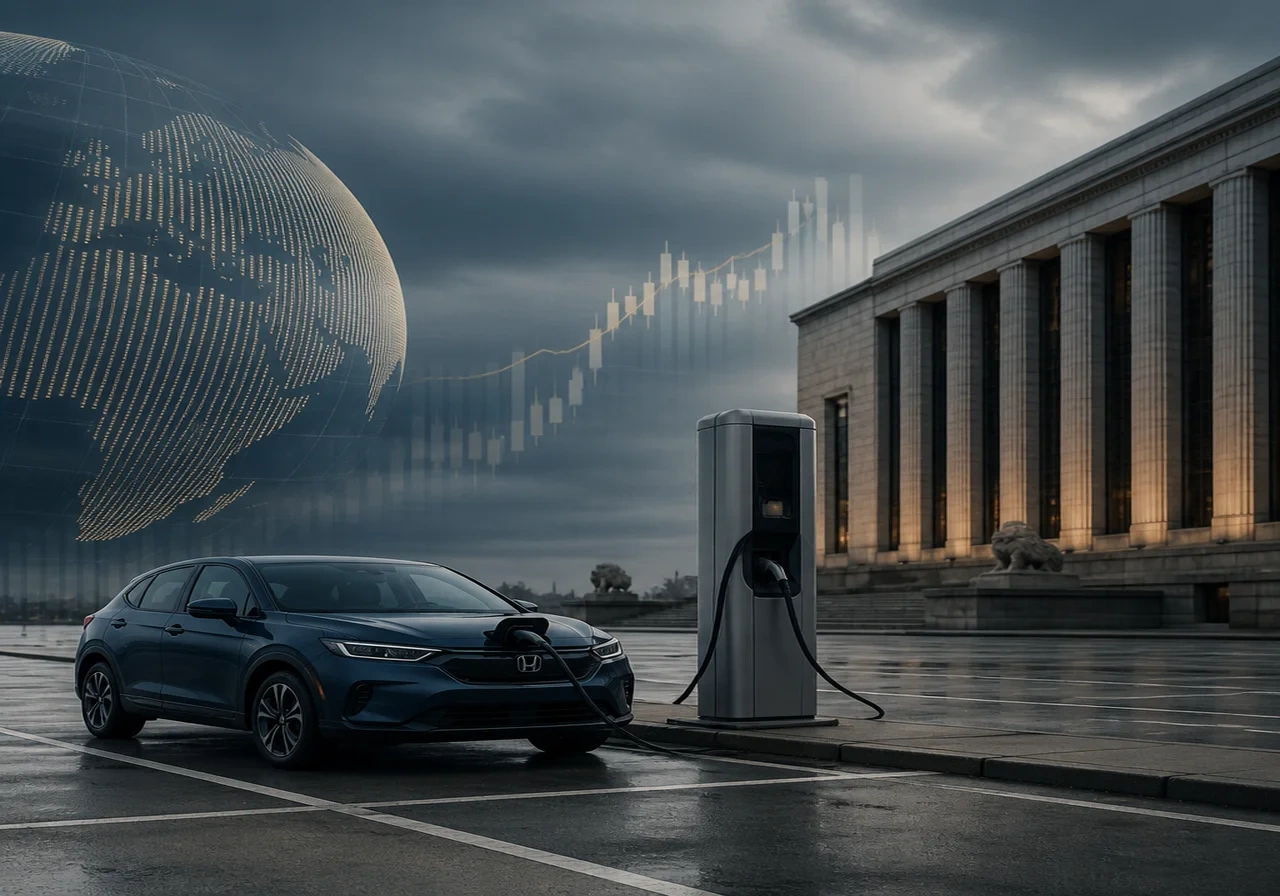
What makes this slump particularly awkward is the timing. The global EV market isn't shrinking — it's growing at double-digit rates. Competitors aren't waiting. Volkswagen, Hyundai, and Kia have all rolled out dedicated electric platforms with competitive range and pricing. Chinese manufacturers are flooding markets with affordable options. Honda, meanwhile, seems stuck at the starting line while the race is already a few laps in.
Why Honda Is Losing Ground to Competitors
Honda's EV troubles didn't appear overnight. They trace back to a cautious — some would say hesitant — approach to electrification. While Tesla was proving that people actually wanted electric cars and Hyundai was pouring billions into dedicated platforms, Honda placed its early bets on hybrids. That was a profitable decision in the short term, but it left the company without a genuine battery-electric platform when the market tipped.
"Late entry" is the polite way analysts describe it. Honda's first mass-market EV for global audiences arrived years after the Tesla Model 3 had already become a bestseller. By the time Honda's electric models reached showrooms, the conversation had moved on. Buyers now expect over 300 miles of range, fast charging networks, and seamless software experiences. Honda's current offerings deliver underwhelming range figures on platforms that weren't designed from the ground up for electric powertrains.
Then there's the price problem. Honda built its reputation on affordability — the Civic and Accord won generations of buyers by offering more value than European competitors. But in the EV space, Honda's models have landed at price points that put them directly against Tesla's Model 3 and Model Y, or Hyundai's Ioniq 5 and Ioniq 6. When a buyer cross-shops and sees similar money buying substantially more range, faster charging, and better software from a competitor, the Honda badge loses its traditional pull.
China represents another dimension of the challenge. BYD, Nio, Xpeng, and others have made the Chinese EV market the most cutthroat on earth. Honda's presence there, long sustained by gasoline models built through joint ventures, has eroded as local brands undercut on price and leapfrog on technology. The company isn't just losing EV share in China — it's watching the overall ground shift beneath its feet.
Impact on the Automaker's Stock
Stock markets are forward-looking machines. They don't just price what a company earned last quarter — they price what investors believe the company will earn three, five, and ten years from now. And right now, the market is pricing doubt into Honda's future. The automaker's shares have underperformed the broader S&P 500 and lagged behind several global auto peers during the current cycle.
This isn't a panic sell-off of the kind we've covered when sudden shocks hit. As we explored in our analysis of how labor market data shapes Federal Reserve policy, markets often digest bad news in waves — first the headline number, then the second-order implications. With Honda, the market seems to be working through those second-order questions now. If EV adoption accelerates and Honda has nothing compelling to sell, what happens to revenue in five years? What happens to margins when the profitable gasoline business inevitably shrinks?
Analyst notes have grown more cautious. Several research desks have trimmed their price targets, not necessarily because Honda is in crisis today, but because the path to a competitive EV portfolio looks longer and more expensive than previously modeled. Every quarter that passes without a credible EV volume ramp-up is a quarter the market re-rates the stock toward a lower multiple. Honda still makes money — its motorcycle division and hybrid models remain strong — but the growth narrative that stocks need to command premium valuations has lost its engine.
Honda's Response: New Models and Partnerships
Honda's leadership isn't pretending the problem doesn't exist. The company has laid out plans to introduce 30 new electric models globally by the end of the decade. That's a serious numerical commitment — but "by 2030" is a long time in an industry where competitors refresh their lineups every two or three years. The question isn't whether Honda will launch EVs; it's whether they'll arrive fast enough and at the right price-performance point to matter.
Partnerships have become a central part of Honda's strategy. The company has worked with General Motors on shared EV architecture, tapping into the American automaker's Ultium battery platform for certain models. That arrangement makes sense on paper — splitting development costs and accelerating time-to-market. But it also raises a strategic question: if Honda is relying on a Detroit rival's technology to compete, what does that say about its own in-house capabilities?
In Japan, Honda is investing heavily in next-generation battery technology, including solid-state cells that promise faster charging and longer life. These are genuine engineering strengths. The catch is timing. Solid-state batteries have been "a few years away" for a decade now. Toyota, Honda's eternal rival, is working on the same technology. Whoever commercializes it first may get a meaningful advantage, but the interim years still need to be filled with products people want to buy.
What Analysts Are Saying
The analyst community is split between patience and frustration. The bull case — and it exists — rests on Honda's engineering heritage and financial strength. This is a company with a pristine balance sheet and decades of manufacturing excellence. If anyone can engineer a turnaround, Honda can. The brand still commands loyalty in key markets, and its hybrid lineup bridges the gap for buyers not quite ready to go fully electric.
The bear case is simpler: time is running out. The global auto industry is shifting faster than most expected, and the window for Honda to establish itself as a credible EV player narrows with every new Tesla factory and every BYD export shipment. If Honda's EV sales don't begin a meaningful recovery within the next 18 to 24 months, the company risks being permanently marginalized in the world's fastest-growing automotive segment.
One data point worth watching: Honda's EV sales trajectory relative to the overall EV market growth rate. When the market is expanding at 20 percent or more per year and a company's EV sales are flat or declining, the gap between where the industry is heading and where Honda sits grows exponentially. Refer to the data visualization below for a snapshot of Honda's key EV performance indicators, illustrating the divergence between the company's electric ambitions and its current market reality.
Conclusion
Honda's EV sales slump isn't an existential crisis — at least not yet. The company still builds millions of profitable vehicles, and its hybrid technology remains genuinely competitive. But the stock market is designed to price tomorrow's winners, not yesterday's. And right now, Honda doesn't look like a winner in the electric transition that will define the auto industry for the next two decades.
The company has the resources to reverse course. Its planned model blitz, battery research, and strategic partnerships could, in theory, close the gap. What's missing is evidence — a single EV model that resonates with buyers the way the Civic once did for a generation of budget-minded drivers. Until that arrives, Honda's stock will likely remain under pressure, caught between a profitable past and an uncertain electric future.
For anyone watching the auto sector, Honda represents a critical test case. It asks whether a historically excellent manufacturer — one that got nearly everything right for 50 years — can adapt to a technological shift that rewards speed over refinement. The answer isn't obvious. But it's a question the market will be answering, quarter by quarter, for years to come.
Frequently Asked Questions
Why are Honda EV sales declining?
Honda's EV sales are declining due to strong competition from established players like Tesla and BYD, as well as a lack of compelling, affordable EV models. Honda was slow to transition to electric powertrains, and its current offerings, such as the Honda e and e:Ny1, have not resonated with buyers who prefer longer range and lower prices.
How does the EV slump affect Honda's stock?
The EV slump has pressured Honda's stock as investors worry about the company's future growth prospects. Honda's shares have underperformed the broader market, with declines attributed to disappointing sales figures and uncertainty about the company's electrification strategy. Analyst downgrades have also weighed on the stock.
What is Honda doing to boost EV sales?
Honda has announced plans to launch 30 new EV models globally by 2030 and is investing heavily in battery technology and production. The company is also forming partnerships, such as its collaboration with GM on EV platforms, to accelerate development. However, these efforts may take years to show results.
Is Honda at risk of falling behind in the EV race?
Yes, Honda currently lags behind key competitors in the EV market. Its small market share and limited model lineup put it at a disadvantage. However, Honda's strong brand reputation and financial resources could help it recover if its upcoming EV models gain traction.
Should investors be concerned about Honda's EV strategy?
Investors have reason to be cautious about Honda's EV strategy, given the slow start and intense competition. While Honda is committing to electrification, the timeline for meaningful market share gains remains uncertain. Diversification into hybrids and fuel cells may help, but the EV transition is critical for long-term growth.