Introduction: A 20% Surge in Global EV Sales
Global electric vehicle sales delivered a headline-worthy number in July 2025: a 20% jump compared with the same month a year earlier. The pace of change is no longer a slow crawl. In showrooms from Shanghai to Stuttgart, the electric car is rapidly becoming the default choice for a new generation of drivers, and this latest monthly tally cements that shift.
What makes this 20% figure stand out is not just the percentage itself, but the scale of the market it represents. Industry trackers say that the global monthly sales total easily crossed seven figures again in July, pulling the yearly run-rate to a level that most analysts would have considered wildly optimistic just a few years ago. The table below breaks down the key regional and automaker estimates that give shape to this momentum.
For a broader perspective, the U.S. market has also been proving its resilience. As we explored in our May 2026 analysis of record US EV sales, American buyers have kept pushing EV adoption even after federal tax credits ended, suggesting that the technology is standing on its own feet rather than leaning on government support.
What’s Behind the 20% Year-Over-Year Jump in EV Sales
Boil it down, and three forces are doing most of the heavy lifting this July: more affordable models, denser charging networks, and policy tailwinds that refuse to fade. Carmakers have finally started producing electric vehicles that feel like ordinary cars, not science experiments, and that’s resonating with buyers who just want a reliable way to get to work without stopping at a gas station.
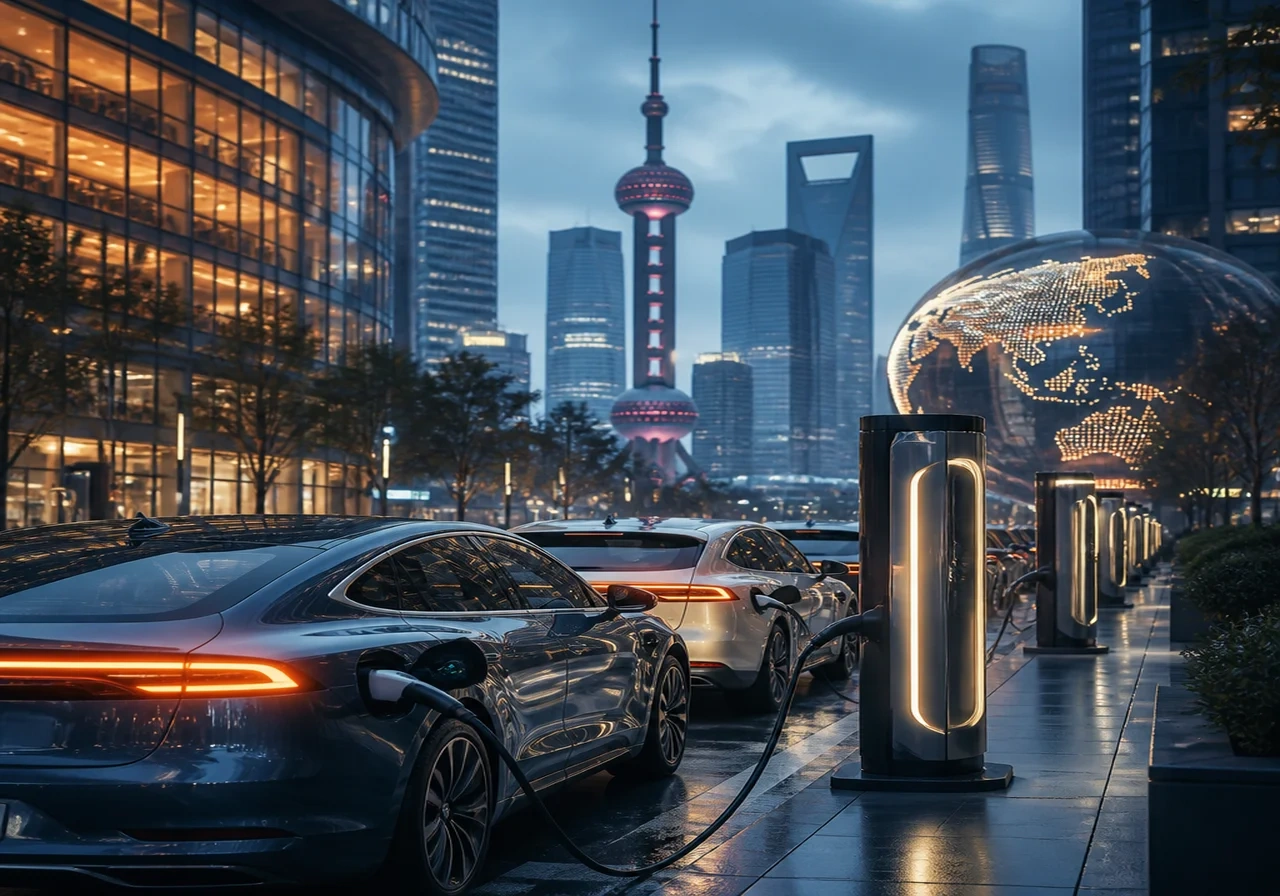
Charging anxiety, long the deal-breaker for many fence-sitters, is steadily becoming yesterday’s worry. Public charging stations are popping up in supermarket parking lots, highway rest stops, and apartment complexes. In China, which accounts for the largest slice of the global EV market, a government-backed push has built out the backbone of a charging network that makes electric driving practical even for people who don’t have a private garage.
Policy continues to nudge demand forward, too. European emission rules are tightening the screws on conventional engines, and many Asian countries are dangling subsidies and tax breaks that make the total cost of ownership for an EV lower than that of a comparable gasoline car. All these factors have converged to keep the year-over-year growth rate not just positive, but emphatically so.
Regional Breakdown: Where Global EV Sales Surged in July 2025
When you pull apart the global number, the story is lopsided in a familiar way: China and Europe are doing the heaviest lifting. China’s domestic brands and Tesla’s Shanghai factory kept the order books full, and a string of new compact models priced for the mass market broadened the addressable customer base beyond early adopters. Europe, meanwhile, saw strong gains in Germany, France, and the United Kingdom, where corporate fleet buyers are electrifying at a rapid clip to meet sustainability targets.
North America, while not matching the breakneck pace of Asia and Europe, is still moving forward. As we noted earlier, the U.S. market recorded a record high as recently as May 2026, showing that the trend goes well beyond a single summer surge. Canada’s provinces are also chipping in, with Quebec and British Columbia continuing to punch above their weight in EV market share.
Emerging markets remain the wild card. India, Brazil, and parts of Southeast Asia are starting to matter in the global tally, but their July 2025 volumes are still modest compared with the giants. What’s encouraging is that the direction is unambiguously upward, and each year adds a few more countries to the list of serious EV markets.
The data visualization below illustrates how far the world has come since 2020, when global EV sales were a fraction of today’s numbers. The steady climb, and especially the steepening slope in 2024 and 2025, tells you that we’re well past the “experimental” phase.
Price Trends and Automaker Commitments
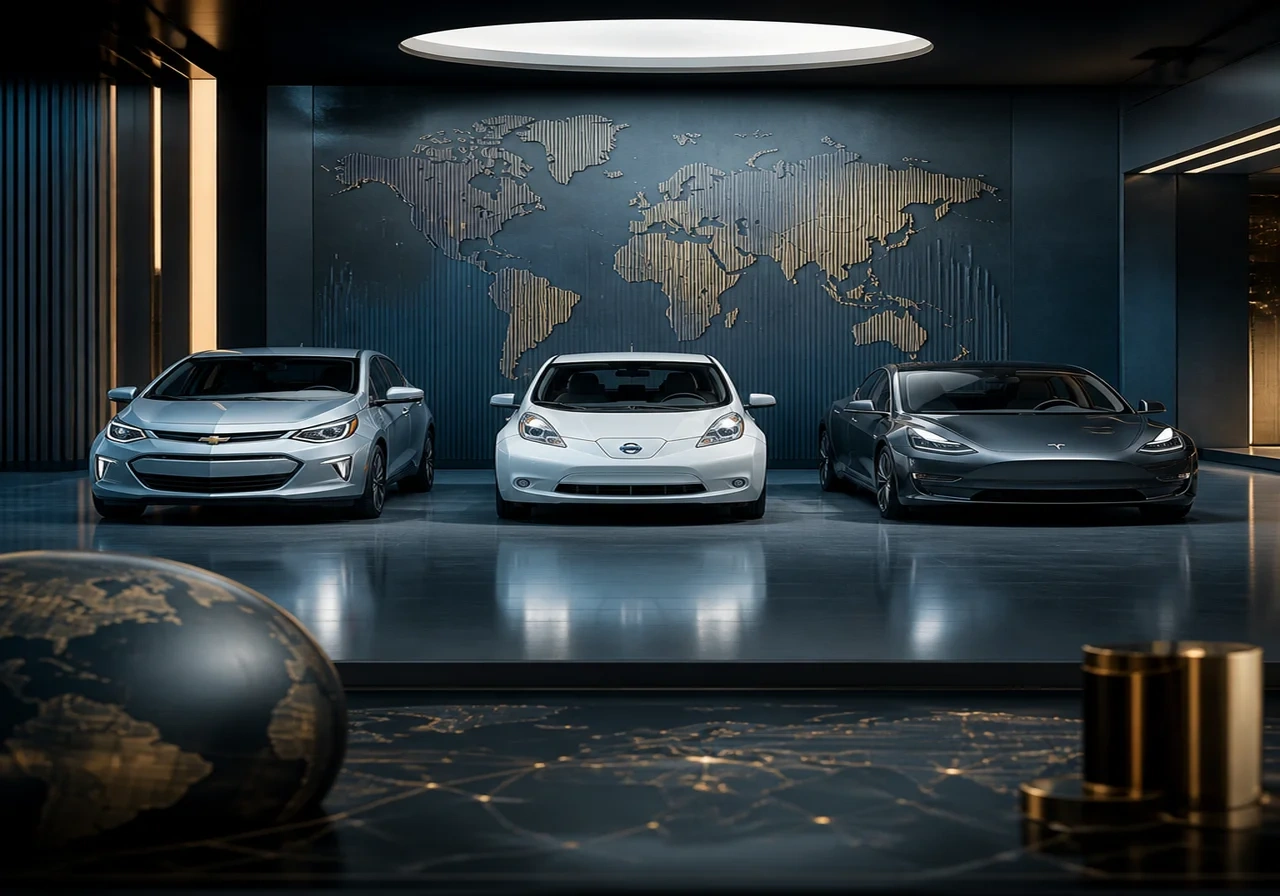
One of the quietest but most important developments is the convergence of EV sticker prices with what ordinary families are willing to pay. Several of the best-known electric cars now sit in the $25,000 to $35,000 range before incentives, including the Chevrolet Volt, Nissan Leaf, Toyota Prius Prime, and Tesla Model 3. The Chevrolet Bolt, meanwhile, lists at around $37,000. These are no longer luxury toys; they’re mainstream vehicles that compete head-to-head with the Honda Civics and Toyota Corollas of the world.
Automakers are baking big bets into their future lineups. Honda has publicly stated that it wants plug-in hybrids and battery electric vehicles to make up two-thirds of its global sales by 2030. Volkswagen, one of the world’s largest carmakers, has pledged to have EVs account for 25% of its sales as early as 2025. Those aren't vague aspirations—they're the kind of targets that force supply chains, factory retooling, and dealer training to get in line.
Meeting those goals means building millions of battery packs, securing critical minerals, and keeping a lid on costs. So far, battery prices have fallen faster than many industry forecasts predicted, which helps explain why the price gap between electric and gasoline cars keeps shrinking. As battery costs decline further, the economic argument for going electric becomes harder to ignore, even without a government check to sweeten the deal.
Challenges and the Road Ahead
For all the good news, the electric transition still has plenty of potholes. Supply chain bottlenecks for lithium, nickel, and cobalt can disrupt production schedules, and they also concentrate geographic power in a handful of mining countries. Charging infrastructure, while expanding, isn’t evenly distributed yet. Rural areas and multi-unit apartment buildings remain stubborn pain points that require targeted investment and creative solutions.
There’s also the oil price question. Some energy economists point out that if crude oil were to settle into a sustained $50–60 range for a decade or more, it could slow the adoption rate by making gasoline cars artificially cheaper to run. History even shows a small dip in EV sales during the oil price slump of 2014–2016. But today’s electric car makers are cutting manufacturing costs faster than ever before, and many analysts believe that technological progress could outrun the drag from cheap oil.
Beyond economics, automakers also face the challenge of winning over the pragmatic middle—the drivers who don’t obsess over carbon footprints but simply want a dependable car at a fair price. For them, the global EV sales figures of July 2025 are just proof that their neighbours are already making the switch with confidence.
Conclusion
The 20% year-over-year rise in July 2025 global EV sales is more than a data point; it’s a signal that the electric car market has entered a new, more durable phase. China and Europe are expanding at a brisk clip, while the United States continues to build on its own record-setting months. Prices are falling, charging grids are filling in, and carmakers are staking their futures on an electric lineup.
Nobody should mistake this for a straight line to victory. Supply chains are fragile, infrastructure gaps persist, and economic shocks can still shift consumer behaviour. But the trend visible right now shows that the world is buying electric cars in numbers that would have been unthinkable a decade ago, and there’s little sign of a U-turn.
For drivers watching from the sidelines, the message of July 2025 is straightforward: the electric vehicle isn’t a niche experiment anymore. It’s a mainstream product that is rapidly becoming the default choice on dealership lots around the globe.
Frequently Asked Questions
Why did global EV sales grow 20% in July 2025?
Growth was driven by strong demand in China and Europe, expanding charging networks, new affordable EV models, and government incentives. Automakers like Volkswagen and Honda are ramping up production to meet ambitious EV targets.
Which region leads in EV sales?
China leads with over 600,000 EVs sold in July 2025, followed by Europe at 350,000. The U.S. market also showed growth, though at a slower pace. China's dominance is supported by government policies and domestic manufacturers.
How do prices of popular EVs compare?
Many EVs like the Chevy Volt, Nissan Leaf, Toyota Prius Prime, and Tesla Model 3 are priced between $25,000 and $35,000 before tax incentives. The GM Bolt is about $37,000. Prices are gradually declining as battery costs fall.
What are the main challenges facing EV adoption?
Challenges include high upfront costs, limited charging infrastructure in some regions, range anxiety, and supply chain constraints for batteries. However, investments in charging networks and declining battery costs are mitigating these issues.