The Trust Fund Timer: What Social Security Trust Fund Depletion Actually Means
The clock is ticking toward Social Security insolvency by 2032, a date that keeps creeping closer. But what does "running dry" really look like? It doesn’t mean the checks stop completely. The Social Security trust funds — giant reserves built from decades of payroll taxes — will have been spent down. At that point, the system can only pay out what it takes in each year from current workers’ taxes. Since payroll taxes cover only about 75 to 80 cents of every dollar the government has promised, the remaining 20 to 25 percent would simply vanish from monthly checks unless Congress acts.
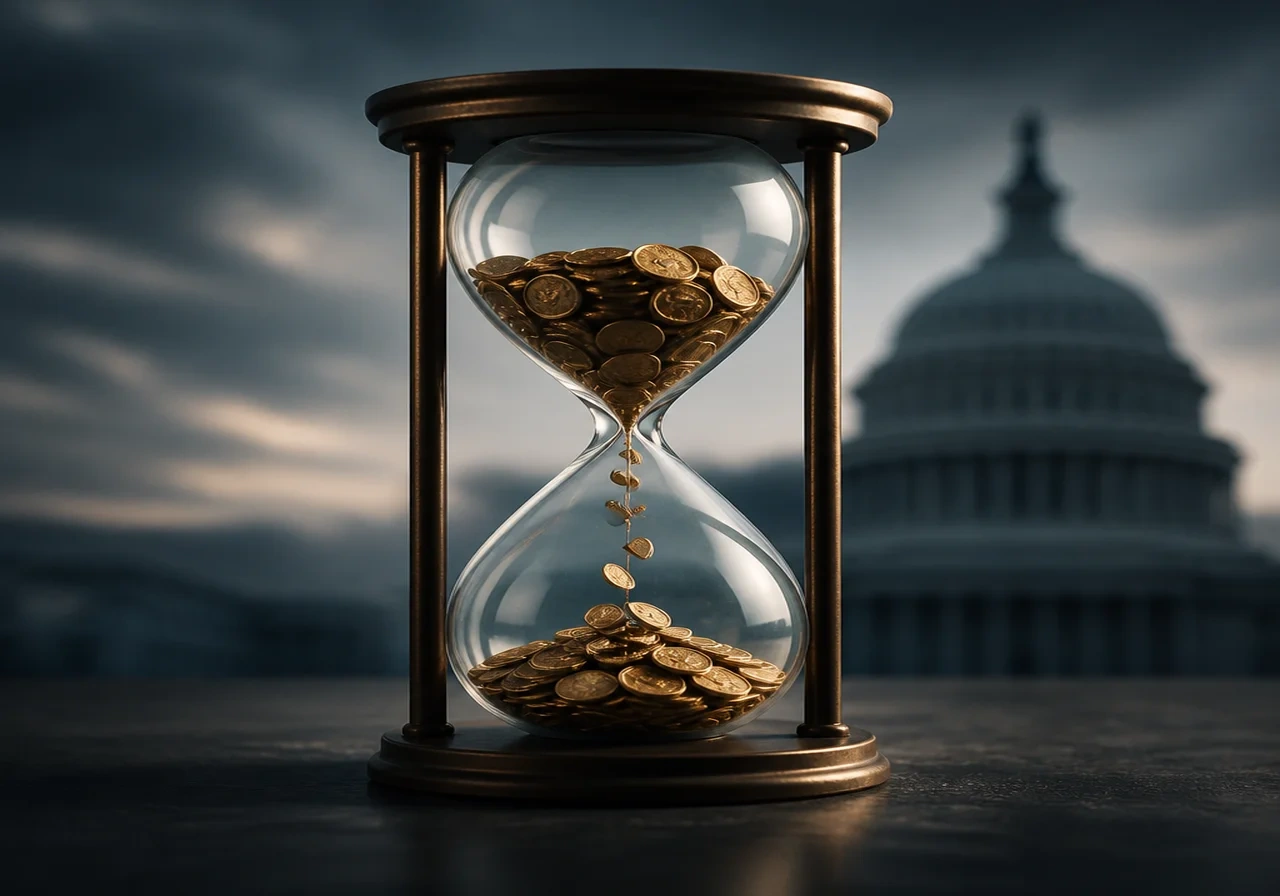
Think of it like a household budget. You have a savings account (the trust fund) that covers the gap between your paycheck (payroll tax revenue) and your bills (benefit payments). Once that savings runs out, you have to live on your paycheck alone. You don’t go to zero — but your spending gets cut by a fifth overnight. That’s the cliff retirees are staring at.
The formal name for Social Security is Old-Age, Survivors, and Disability Insurance, or OASDI. The trust fund depletion scenario is not the end of OASDI, but it’s the end of the full-benefit promise. The gap has been known for decades, but the political will to close it has been missing.
Why 2032 (or 2034) Is Closer Than It Looks
You’ll see different years tossed around — 2032, 2034, even 2035. The official Social Security Trustees report often projects exhaustion in the mid-2030s, but independent analysts, including AARP in its 2026 policy push, warn that 2034 is a best-case scenario. A sharp economic downturn, slower wage growth, or a surge in early retirements could pull the date forward to 2032 or earlier. The uncertainty itself is part of the crisis: it’s hard to plan your retirement when the safety net has an expiration date that keeps shifting.
As we explored in our coverage of the 2025 Social Security wage base, the cap on earnings subject to the payroll tax has been rising fast. But even those increases can’t keep up with the outflow. In 2026, the wage base jumped to $184,500, a 4.77 percent bump from 2025. Higher-paid workers pay more into the system, yet the long-term math still doesn’t add up. The baby boomer wave, longer life expectancies, and a smaller workforce relative to retirees all weigh on the equation.
This isn’t a distant problem. For a 60-year-old today, 2032 is six years away — landing squarely in their retirement. The looming shortfall is a key driver of what some economists call a retirement crisis, where millions may face a sharp drop in living standards.
The Bipartisan Stalemate: Why Neither Party Has a Plan for Bipartisan Social Security Reform
If the math is clear, why hasn’t Washington fixed it? The answer lies in a deep ideological divide. Any credible fix involves one or more of three painful moves: raise taxes, cut benefits, or push the retirement age higher. Both parties agree the other’s solution is unacceptable.
Democrats largely favor raising revenue — by increasing the payroll tax rate or, more commonly, by lifting the wage cap so that earnings above $184,500 are also taxed. Some propose a “donut hole” approach, where only very high incomes (above $400,000) are hit. Republicans generally oppose tax increases and lean toward benefit cuts, such as reducing cost-of-living adjustments for wealthier retirees or gradually raising the full retirement age beyond 67.
Neither side wants to be the one that raises taxes on the middle class or cuts grandma’s check. The result is legislative paralysis. AARP has endorsed some narrow bipartisan bills, like the Claiming Age Clarity Act, which aims to help people understand the enormous difference between claiming at 62 versus 70 — up to a 77 percent increase in monthly payments. But as we detailed in our analysis of AARP’s advocacy efforts, these small fixes don’t address the solvency hole. They’re side dishes when the main course is missing.
Congress is caught in a classic game of chicken: each party waits for the other to blink. The closer we get to 2032, the more drastic the medicine will have to be, yet the political incentive to act early is almost zero.
The Math Behind the Shortfall: Wage Base vs. Benefits
To understand why the problem persists even as wage bases rise, look at the numbers. Social Security is funded by a 12.4 percent payroll tax split evenly — 6.2 percent from employees and 6.2 percent from employers — on earnings up to the annual cap. Self-employed workers pay the full 12.4 percent themselves. In 2026, the wage base reached $184,500, meaning the maximum an employee and employer together contribute is $28,878. In 2025, that sum was $21,836.40. The table below shows the rapid climb.
But here’s the catch: wages for the highest earners have grown much faster than the national average. As a result, a declining share of total U.S. earnings is subject to the payroll tax. Some estimates suggest that only about 82 percent of all wage income now falls under the cap, down from nearly 90 percent in the early 1980s. That escaping income — untaxed for Social Security — represents billions of dollars that could otherwise shore up the trust fund.
The chart below (Figure 1) visualizes this wage base trajectory. The bar chart shows the cap climbing from $168,600 in 2024 to $184,500 in 2026, a nearly 10 percent increase. Yet even with this growth, the program’s long-term deficit remains in the hundreds of billions of dollars annually. The math of the shortfall is brutal: the system pays out more in benefits than it collects in taxes, and the interest earned on the trust fund bonds isn’t enough to bridge the gap once the reserves are gone.
What a Depleted Trust Fund Means for Retirees and Workers
If the trust fund hits zero, the Social Security Administration would have to cut checks across the board by roughly 20 to 25 percent. For a retiree receiving $2,000 a month, that means a drop to around $1,500 — a $6,000 annual hit that could make the difference between paying for medicine or skipping it. Low-income seniors, who depend on Social Security for almost all their income, would be squeezed hardest.
Workers currently paying into the system face an equally uncomfortable reality. They’re funding benefits for today’s retirees with the understanding that they’ll get their turn, but that promise is eroding. Younger generations are already skeptical. A survey by the National Institute on Retirement Security found that more than half of millennials and Gen Z believe they won’t receive a dime from Social Security. That’s not quite accurate — payroll taxes will still flow — but the perception of broken trust is corrosive.
The ripple effects extend beyond individual retirements. Reduced spending power for tens of millions of older Americans would drag on the broader economy, hitting local businesses, healthcare providers, and housing markets. The retirement crisis isn’t just a personal nightmare; it’s a systemic risk.
Conclusion
Social Security isn’t going to vanish, but the version that survives the trust fund’s depletion will be a shadow of its former self unless lawmakers find a fix. The math hasn’t changed: to close the gap, the system needs more revenue, slower benefit growth, or a combination of both. The political stalemate has pushed the date of reckoning from a distant decade to an almost immediate future.
There are credible proposals on the table, from lifting the payroll tax cap to adjusting the inflation formula for benefits. Each has trade-offs, and none is painless. The longer Congress waits, the sharper the eventual cuts or tax hikes will have to be. With 2032 now visible on the horizon, the question isn’t whether action will come — it’s whether it will come in time to prevent a generation of retirees from learning what “insolvency” really feels like.
For individual savers, the lesson is to treat Social Security as one leg of a stool that you personally need to reinforce. Ensuring your own retirement savings are on track, delaying claiming if possible to maximize monthly checks, and staying informed on policy changes are all steps that can reduce your exposure to Washington’s indecision. The system may be frayed, but it’s still the largest source of income for most retirees — and understanding its shaky footing is the first step toward protecting your future.
Frequently Asked Questions
When will Social Security run out of money?
The Social Security trust funds are projected to become depleted by 2034, according to the latest AARP analysis. After that, payroll taxes would cover only about 75-80% of scheduled benefits unless Congress acts. Some estimates suggest depletion could occur as early as 2032 if economic conditions worsen.
Why can't Congress fix Social Security?
Congress remains deadlocked because any solution requires politically painful choices. Republicans generally oppose tax increases, while Democrats resist benefit cuts or raising the retirement age. This bipartisan gridlock has persisted for decades despite the program's growing financial strain.
What happens to my benefits if Social Security runs dry?
If the trust fund is depleted, Social Security would still collect payroll taxes but could only pay about 75-80% of promised benefits. That means a retiree receiving $2,000 per month might see their check cut to around $1,500-$1,600. Benefits would continue, but at a reduced level.
How does the Social Security wage base affect the shortfall?
The wage base is the maximum earnings subject to Social Security tax. In 2026, it is $184,500. Because wages for high earners have grown faster than the average, the wage base captures a declining share of total earnings. Raising or eliminating the wage base is a commonly proposed fix to increase revenue.
What are the proposed solutions to fix Social Security?
Proposed solutions include raising the payroll tax rate, increasing or eliminating the wage base, raising the full retirement age, reducing cost-of-living adjustments for higher-income beneficiaries, and means-testing benefits. AARP has endorsed bipartisan bills like the Claiming Age Clarity Act to improve decision-making.