What Is the SPCX IPO?
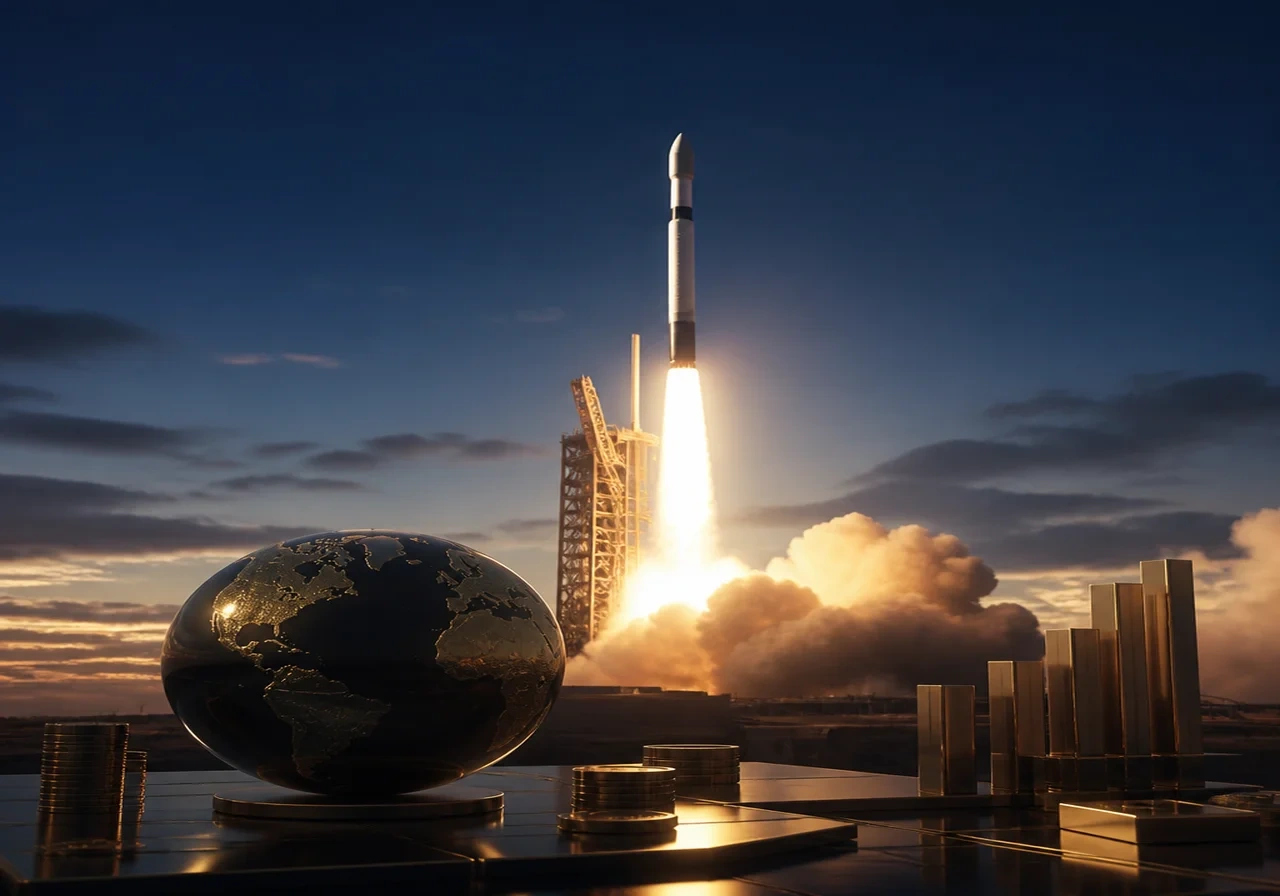
SpaceX—the rocket and satellite company that Elon Musk built into a pillar of the new space economy—is going public. The ticker is SPCX, and the listing on Nasdaq marks what may be the largest initial public offering ever. After more than two decades as a private company, SpaceX filed its S-1 registration with the Securities and Exchange Commission in May 2026, setting up a stock market debut that will let everyday investors buy a piece of the firm behind Starlink internet and the Starship rocket program.
As we detailed in our coverage of SpaceX’s IPO filing, the company confidentially submitted paperwork in April and is now racing toward a roadshow that begins June 8. While that speed builds excitement, the nature of an IPO—explained in our beginner’s guide to initial public offerings—is that early trading can be bumpy and unpredictable. Here we cut through the headlines to lay out what the numbers actually say.
Key IPO Details: Price, Shares, and Valuation
SpaceX set a fixed price of $135 per share and plans to sell 555.6 million shares in the offering. That prices the company at roughly $1.25 trillion after the deal closes, a valuation reached in February 2026 when SpaceX merged with xAI, Musk’s artificial intelligence startup. By comparison, the global space economy was worth $626 billion in 2025, according to Novaspace, which makes this valuation a bet that SpaceX’s reach extends far beyond rockets.
A few structural details matter hugely for new shareholders. Musk will own about 42% of the equity but control roughly 80% of the voting power through a dual-class share structure. That means outside investors get an economic stake but far less say in how the company is run. About 5% of common stock is reserved for employees and certain other individuals at the offering price, and reports indicate that around 20% of the shares were made available to retail investors—a higher slice than most IPOs. The table below breaks down these figures alongside the company’s financial snapshot.
SpaceX’s Financial Picture: Revenue, Losses, and Early Growth
SpaceX disclosed in its S-1 that revenue for the first three months of 2026 hit $4.7 billion. Over the full year 2025, total revenue reached $18.67 billion. Adjusted EBITDA—a profit measure that strips out interest, taxes, depreciation, and amortization to show underlying operating performance—was $1.1 billion in the first quarter and $6.58 billion for all of 2025.
But the headline numbers hide a significant red ink detail: the company reported a loss from operations of $1.9 billion in Q1 2026. That gap is driven by heavy spending on Starlink’s satellite constellation and the Starship development program. For investors accustomed to mature, profitable companies, the math here is a reminder that SpaceX is still in aggressive build-out mode—chasing a vision that may pay off over a decade, not a quarter.
The financial data table included in this article shows the contrast between strong revenue growth and current operating losses. These numbers are drawn directly from the prospectus, so they represent what SpaceX itself told regulators.
The Risks That Come With the SPCX Hype
Any company facing an IPO carries risks, but SpaceX brings a few that are unusually large. First, Elon Musk’s 80% voting control means a single person has the final say on strategy, acquisitions, and capital allocation. That concentration can accelerate decisions—or leave minority shareholders with no recourse if they disagree. As we noted in our comparison with Anthropic’s upcoming IPO, governance matters especially when a founder holds outsized sway.
Second, the valuation. At $1.25 trillion, the stock price embeds enormous future success. If the space economy takes longer than expected to reach the projected $1 trillion by 2034, or if competitors eat into SpaceX’s 85% launch share, the stock could experience sharp corrections. IPOs, as a rule, are volatile in their first months of trading; a sky-high starting price only amplifies the swing.
Third, the burn rate. Losing $1.9 billion from operations in a single quarter while generating $4.7 billion in revenue raises the question: how long before profitability, and at what dilution? SpaceX’s S-1 notes the capital-intensive nature of its projects, which means the company could lean on future share sales even after the IPO.
How Does SPCX Compare to Other Mega-IPOs?
The 2026 IPO calendar is crowded with big names: OpenAI and Anthropic are both eyeing the public markets. Anthropic, as we’ve covered, was approaching a $44 billion revenue run-rate before its own filing—with a much lower valuation multiple than SpaceX commands. That contrast matters because it shows how differently investors price an AI pure-play versus a hybrid space-and-AI giant. SpaceX, through its xAI merger, carries both a rocket-launch business and an artificial intelligence division, which may broaden the revenue base but also clouds the valuation story.
The ticker SPCX is a new stock symbol, so there’s no trading history to anchor expectations. For context, the most recent billion-dollar IPO waves taught investors that opening-day pops can quickly reverse. Retail investors who bought in late often found themselves underwater within weeks. The key difference here is the size: with hundreds of millions of shares sold at $135 each, any retreat could be magnified by the sheer volume.
What Investors Should Keep in Mind
When a company goes public, the early days are driven by sentiment and scarcity as much as fundamentals. SpaceX’s decision to allocate a meaningful portion to retail investors is a gesture of inclusion, but it does not guarantee a smooth ride. The first quarterly earnings report after the debut will be the real test—it will show whether revenue growth can outpace operating losses and whether Starlink subscriber numbers are accelerating.
The space industry’s long-term prospects are real. The global space economy is forecast to grow from $626 billion in 2025 to $1 trillion by 2034. SpaceX, which launches 85% of spacecraft into orbit and operates the Starlink internet service, sits at the center of that trend. But between now and 2034, there will be regulatory fights, technology setbacks, and possibly a shift in government contracts. An IPO ticket is not a one-way ride up.
Conclusion
The SPCX IPO is historic in scale and ambition. For the first time, retail investors can directly own shares in a company that dominates orbital launches and is building the infrastructure for a multiplanetary economy. The fixed $135 price and wide allocation make access unusually democratic.
However, the numbers from the S-1 tell a story of a company burning cash to chase a trillion-dollar dream. Elon Musk’s voting control, the $1.9 billion quarterly operating loss, and a valuation that already prices in years of flawless execution create real tension. Past mega-IPOs remind us that early enthusiasm can mislead, and waiting for a few quarters of public-company transparency often gives a clearer picture.
No filing can predict the stock’s path, but the prospectus gives every investor the same foundation: stark growth, ambitious spending, and a governance structure tilted heavily toward one person. Understanding those elements—rather than just the hype—is what the SPCX IPO truly means.
Frequently Asked Questions
What does SPCX stand for and when will SpaceX's IPO start trading?
SPCX is the ticker symbol for SpaceX's IPO on the Nasdaq. The company filed its S-1 in May 2026 and is expected to begin trading in June 2026, with the roadshow starting June 8.
How many shares is SpaceX offering and at what price?
SpaceX is offering 555.6 million shares at a fixed price of $135 per share, giving the company a valuation of approximately $1.25 trillion. About 20% of the shares are reserved for retail investors.
What are the risks of investing in the SPCX IPO?
Key risks include Elon Musk's 80% voting control, the company's operating losses ($1.9 billion in Q1 2026), an extremely high valuation, and the cyclical nature of the space industry. Additionally, IPOs can be volatile in the first months of trading.
How does SpaceX's financial performance look?
SpaceX reported $4.7 billion in revenue for Q1 2026, up from $18.67 billion for full year 2025. However, it posted an operating loss of $1.9 billion in Q1 2026, with adjusted EBITDA of $1.1 billion. The company is investing heavily in Starlink and Starship.
What is the global space economy size and how does SpaceX benefit?
The global space economy was worth $626 billion in 2025 and is expected to reach $1 trillion by 2034, according to Novaspace. SpaceX, which launches 85% of spacecraft into orbit and operates Starlink, is a major beneficiary of this growth.