Gas Prices Forecast: What's Driving the Surge in 2026?
In April 2026, the average price for a gallon of regular gasoline in the U.S. hit $4.23 — a level not seen in four years, according to CNN Business. If you looked at a gas prices forecast 2025 last year, chances are it didn’t picture Brent crude climbing past $117 a barrel or a war throttling the world’s most important oil chokepoint. Yet here we are.
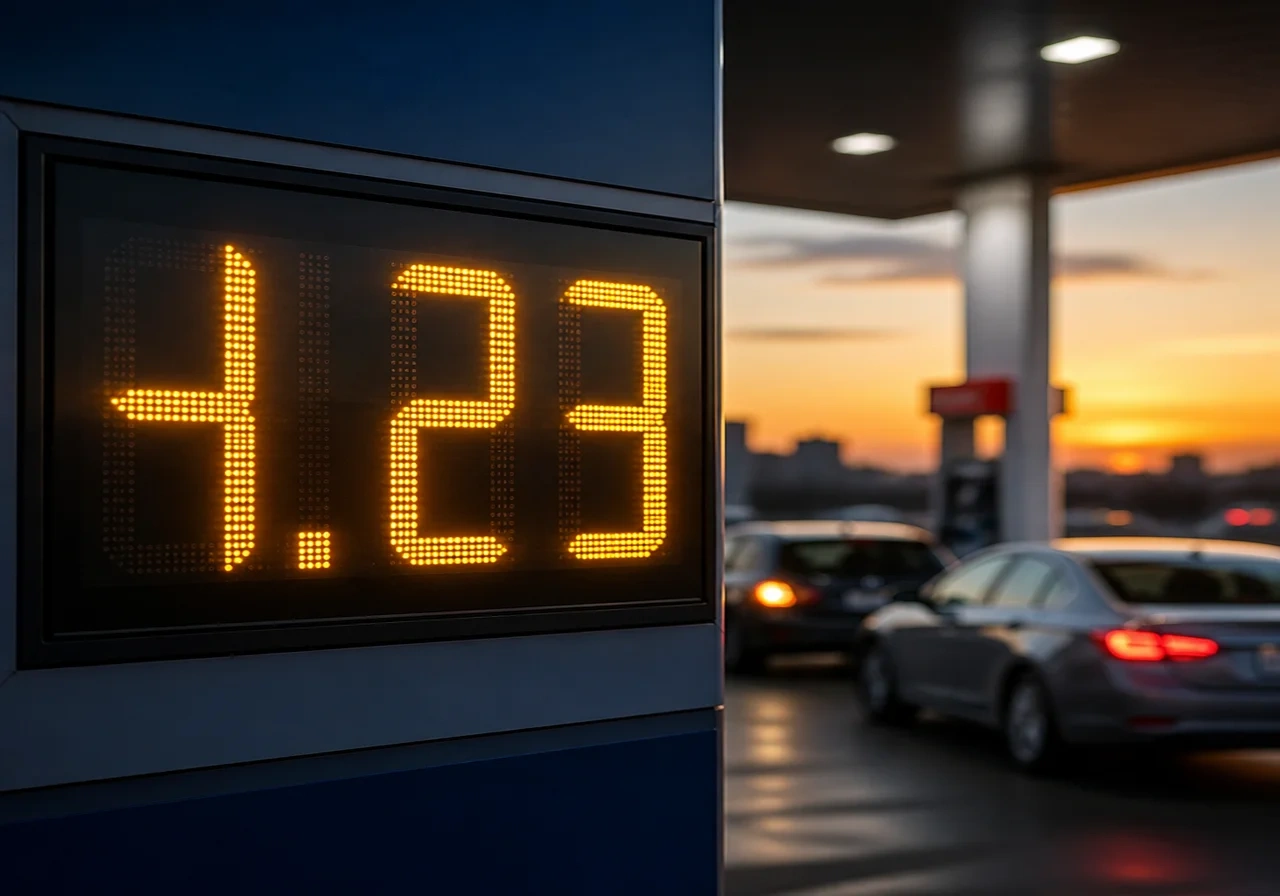
The numbers in the data table below lay out the stark reality. The U.S.-Israel military conflict with Iran has now entered its 69th day, a disruption that has blocked much of the Strait of Hormuz — a narrow 33-kilometer-wide waterway through which nearly 20 million barrels of oil normally pass every day. When a quarter of the world’s traded oil can’t flow freely, prices at the pump react violently.
Compounding the pressure, the U.S. Strategic Petroleum Reserve (SPR) — an emergency stockpile the government taps during supply crises — has been drawn down to its lowest level in roughly 40 years. Emergency releases tied to the war have drained the reserve, leaving little buffer for further shocks. At the same time, the United Arab Emirates’ unexpected departure from OPEC has injected a fresh layer of uncertainty into global supply negotiations, although as one analyst noted, the move’s impact is “limited for as long as the Strait of Hormuz remains largely shut.”
When Will Gas Prices Drop? Expert Insights
There’s no near-term relief in sight. Even if a ceasefire were announced tomorrow, supply chains would take weeks — possibly months — to renormalize. Tankers rerouted around Africa add both time and cost. Analysts interviewed by CNN Business stressed that until the Strait of Hormuz reopens to normal traffic, crude prices will stay elevated, and gasoline will follow. The UAE’s exit from OPEC could eventually allow that country to pump more oil, but the benefit is theoretical while the chokepoint stays closed.
Monetary policy can’t fix a supply shock, either. As we explored in our analysis of average mortgage rates, the Federal Reserve’s rate cuts through 2025 brought the federal funds target down to 3.50%–3.75%. That might lower borrowing costs for businesses and drivers over time, but it won’t unclog a bottleneck in the Persian Gulf. Cheaper credit could even sustain demand for gasoline, partly offsetting any relief from supply improvements.
In the background, a quiet consumer response is already visible. EV sales hit a record high in May 2026, the strongest month since federal tax credits ended, suggesting that sustained high fuel prices are pushing more buyers toward electric vehicles.
Summer Gas Prices and Refinery Output: Key Factors
Summer typically brings higher gasoline prices, driven by seasonal refinery maintenance and the switch to summer-blend fuel, which is costlier to produce. In a normal year, refinery output might tighten just when demand peaks for road trips. But 2026 isn’t a normal year. The bigger constraint isn’t refinery capacity — it’s the crude oil that feeds the refineries.
Refineries along the U.S. Gulf Coast rely heavily on imported crude. When those imports are disrupted, even high refinery utilization can’t produce enough gasoline to bring pump prices down. Refinery output data, while not yet showing dramatic declines, masks the fact that refiners are paying eye-watering prices for the crude they can get. That cost passes directly to the wholesale gasoline market and onto the street-corner price sign.
What the Experts Say About Near-Term Predictions
So what’s the gas price prediction for the rest of 2026? Most forecasts hinge on geopolitics, not economics. If the conflict in Iran de-escalates and the Strait of Hormuz opens, crude could fall sharply, potentially bringing the national average below $4.00 by late autumn. But no expert is willing to bet on that timeline. War evolves unpredictably, and the SPR’s depleted state means the government has less firepower to stabilize markets if another shock hits.
The WVTM 13 report underscored that “experts warn gas prices could spike” further if the SPR runs critically low and hostilities drag on. Meanwhile, the summer driving season — with its typical boost in gasoline demand — creates another upward risk. Any dip at the pump this season is likely to be modest and short-lived.
A consistent theme among analysts is patience, but not passivity. Consumers are being told that the factors driving record fuel bills are largely out of anybody’s immediate control. The advice, though never easy, is to budget for volatility. Several sources noted that even a gradual reopening of Hormuz would lower crude incrementally, but that a full recovery to $3.00-range gasoline seems distant.
Conclusion
Right now, the U.S. gas price sits at a four-year peak of $4.23 per gallon. The war choking the Strait of Hormuz, the near-40-year low in the Strategic Petroleum Reserve, and OPEC’s internal turmoil have combined into a perfect storm for drivers. None of these forces are forecast to fade quickly.
Relief will arrive only when geopolitical tensions cool enough to unblock oil shipments — a resolution that looks months away at best. In the meantime, the surge in EV sales and growing interest in fuel efficiency illustrate how households are adapting to a reality where cheap gasoline is no longer a given. The story of 2026’s pump prices is still being written, but the opening chapters offer little comfort.
Frequently Asked Questions
Why are gas prices so high in 2026?
Gas prices are at a four-year high due to a combination of factors: the ongoing war between US/Israel and Iran disrupting oil shipments through the Strait of Hormuz, the UAE's departure from OPEC creating supply uncertainty, and emergency releases drawing down the US Strategic Petroleum Reserve to near 40-year lows. Crude oil prices have surged to $117 per barrel, pushing retail gasoline above $4.23 per gallon nationally.
Will gas prices go down after the war ends?
If the war in Iran de-escalates and the Strait of Hormuz reopens to normal traffic, oil supply could increase, potentially lowering crude prices. However, analysts caution that even after a ceasefire, it may take weeks or months for supply chains to stabilize and for lower prices to reach the pump. Additionally, other factors like OPEC+ policies and US reserve levels will continue to influence prices.
How does the UAE leaving OPEC affect gas prices?
The UAE's exit from OPEC removes a major producer from the cartel's quota system, potentially allowing the UAE to increase its oil output. In the short term, this could add supply and slightly ease prices. However, the immediate impact is muted because the Strait of Hormuz remains largely closed due to the war, limiting the UAE's ability to export additional oil.
What is the US Strategic Petroleum Reserve and how does it affect gas prices?
The Strategic Petroleum Reserve (SPR) is an emergency stockpile of crude oil that the US government can tap to offset supply disruptions. Recent emergency releases tied to the Iran war have drawn the SPR down to near 40-year lows, reducing the government's ability to intervene further to lower fuel prices. This scarcity adds upward pressure on market expectations for future supply.
When is the best time to expect lower gas prices?
Most experts do not foresee significant relief in the near term. Gas prices may begin to ease later in 2026 if geopolitical tensions subside, the Strait of Hormuz reopens, and OPEC+ increases output. However, summer driving demand and potential refinery maintenance could keep prices elevated through the summer months. A sustained drop likely depends on a resolution to the Iran conflict.