Powering the Intelligence Boom
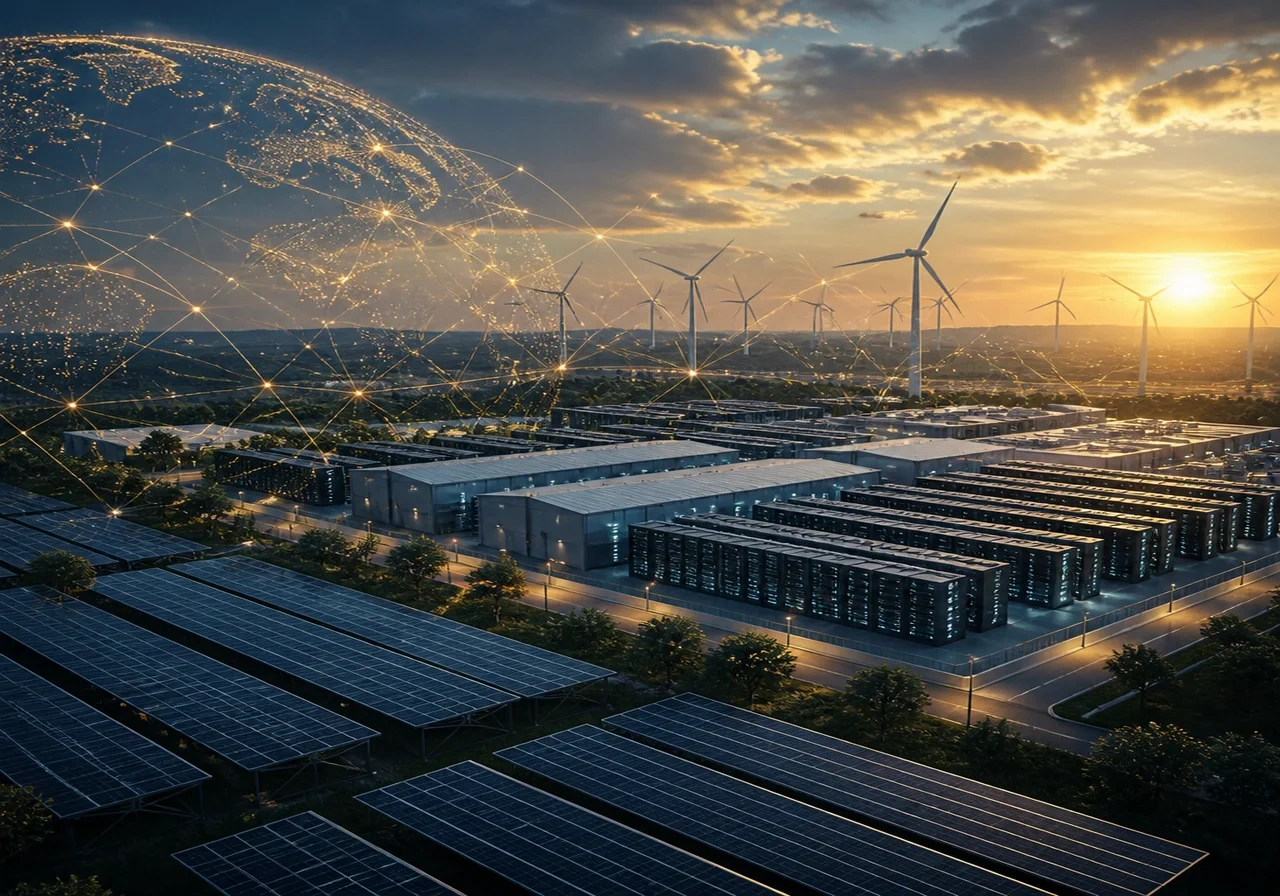
Not long ago, energy was the sleepy corner of the stock market—steady dividends, predictable demand, and little excitement. That script has been flipped entirely. Artificial intelligence now needs so much electricity that it’s transforming the energy sector into one of the most talked-about investment themes in America. The reason is simple: AI runs on data centers, and data centers run on power. A single training run for a large language model can swallow as much electricity as a neighborhood uses in a day, and millions of daily AI queries multiply that appetite across the grid.
This shift isn’t a futuristic prediction. It’s already showing up in utility planning documents, equipment orders, and capital flows. As the AI energy sector becomes a hot investment topic, the ripple effects are reaching everything from solar farms to natural gas pipelines—and even the wires that connect them. Understanding where that demand is heading matters for anyone watching the economy, not just Wall Street insiders.
The AI Energy Demand Surge
The core driver is straightforward: generative AI models require massive parallel computing. Training these models and running them at scale means thousands of specialized processors operating around the clock, all generating heat that must be cooled. The International Energy Agency has flagged that data center electricity use is on a steep upward climb, with AI workloads adding fresh urgency. In the U.S., major technology companies have become some of the largest corporate buyers of green power, signing decades-long contracts to lock in supply.
It helps to think of AI data centers as factories that turn watts into words. Unlike older server farms that mostly handled web traffic, these facilities are compute-dense and energy-hungry from the moment they power on. Developers now routinely scout locations with ample grid capacity, water for cooling, and access to renewable generation. Cities that once courted auto plants are now pitching themselves as AI data center hubs—and the infrastructure race is just beginning.
Key Sectors Transformed
Several parts of the energy world are feeling the pull, each for different reasons. The data table below breaks down the roles at a high level.
Data Centers
The demand is most direct here. AI training and inference, cloud expansion, and the sheer scale of current projects are driving lease rates and construction at a pace not seen since the early internet build-out. Every new megawatt of data center capacity translates into steady, long-term electricity demand, which utility companies now factor into their growth forecasts.
Renewable Energy
Big technology firms have set “24/7 carbon-free energy” targets that require matching their consumption with clean power hour by hour. That’s pushing solar, wind, and battery storage development far beyond what state renewable mandates alone would require. Corporate power purchase agreements—the contracts that let tech giants buy electricity directly from renewable project owners—have become a mainstay of project finance. As a result, wind farms in Texas and solar plants in the Sun Belt are being sized not just for households but for server racks.
Grid Infrastructure
The wires, transformers, and substations that move electricity around are becoming a bottleneck. Connecting a giant data center to the grid can take years, and the backlog of interconnection requests is swamping regional planners. Upgrading that backbone—making it smarter and more flexible—is a quiet but essential part of the AI energy equation. Companies that manufacture transformers, switchgear, and high-voltage cables are seeing order books lengthen.
Natural Gas
Even with the push toward renewables, many data center sites rely on natural-gas-fired power for backup and peak demand smoothing. In regions where transmission constraints limit how much wind or solar can be delivered, gas plants serve as the bridge. Their role may shrink over time, but for now, they’re a pragmatic piece of the reliability puzzle—especially as AI loads run 24/7 and cannot tolerate interruptions.
Investment Implications for the AI Energy Boom
Capital is following the electrons. The AI-driven surge in power consumption has made energy infrastructure a more prominent theme in private equity, institutional portfolios, and venture rounds. For example, deep tech startups that blend AI with grid management or renewable forecasting are attracting attention—part of the broader trend we examined in our analysis of deep tech venture funding. Likewise, the enormous computing demands that sent semiconductor stocks soaring, as we covered in our coverage of the AI chip stock rally, are now reverberating through the power sector.
Observers note that data center electricity consumption has become a structural driver, not a short-term spike. That stability appeals to long-term investors who typically favor predictable cash flows. However, that doesn’t make any single company a sure bet. The landscape is fragmented, and the main effect is to widen the set of businesses—from electric utilities to component suppliers—that can benefit if the expansion plays out as projected.
Risks to Watch
No shift this large comes without uncertainty. One risk is that AI becomes more efficient faster than expected. New chip designs and software optimizations could allow the same tasks to run on a fraction of the power, reducing the pressure on electricity grids. On the other side, regulatory and permitting hurdles could delay new transmission lines, leaving data centers in limbo and slowing the build-out. Local opposition to large solar farms or gas plants can further complicate timelines.
Another variable is the broader economy. If demand for AI services grows more slowly than the current hype suggests, some of the planned data center projects may be postponed or canceled. Energy investments tied to those projects would see returns evaporate. Additionally, the cost of capital matters enormously for infrastructure with long payback periods—higher interest rates can change project math overnight.
None of this means the trend is hollow. It means that the AI energy shift, like any major economic current, will have winners and losers, and the path will be bumpier than a headline suggests.
Conclusion
The connection between artificial intelligence and the energy business is no longer theoretical. It’s visible in utility planning, in the rush to secure grid connections, and in the investment themes that are moving from niche to mainstream. Data centers are the bridge, but the implications stretch across renewables, grid equipment, and conventional power.
For anyone trying to understand where the economy is going, watching energy through the lens of AI demand is likely to be more useful than chasing the next tech rumor. The transformation is physical: steel, copper, silicon, and wind turbines. It doesn’t require picking a single winner; it requires seeing that the machine itself is getting bigger.
The companies and sectors that can deliver reliable, scalable, and increasingly clean power stand to become the picks and shovels of the intelligence age. That’s a story worth following, even if the exact chapter endings remain unwritten.
Frequently Asked Questions
How is AI affecting energy demand?
AI, especially generative AI, requires massive computing power. Training large models and running inference in data centers significantly increases electricity consumption. The International Energy Agency projects that data center electricity use could double by 2026, with AI being a major driver.
What energy sectors benefit from AI growth?
Key beneficiaries include renewable energy providers (solar, wind) due to corporate power purchase agreements, grid infrastructure companies for upgrades and interconnection, and natural gas for backup power. Data center developers also see increased demand.
Are there risks to investing in AI-driven energy?
Risks include regulatory changes, technology shifts (e.g., more efficient chips reducing power needs), and supply chain constraints. Additionally, the pace of AI adoption could slow, affecting demand projections.
How do data centers contribute to AI energy use?
Data centers house the servers that run AI models. They consume enormous amounts of electricity for computing and cooling. A single large AI training run can use as much power as hundreds of homes in a year.