Boxed Beef Prices Today: The Surge at Wholesale Counters
Boxed beef prices today are climbing in a way that few household budgets are prepared for. Wholesale beef prices — the bulk cuts that processors ship to grocery stores and restaurants — have been on a steep upward march, and the reasons behind it stretch far beyond the feedlot.
To understand why, you have to follow the money into the fuel tank of the truck hauling cattle, the diesel turning the processing line, and the anxiety that’s hollowing out consumer confidence. The price of boxed beef isn’t just a market blip. It’s a story about energy, inflation, and the real cost of putting protein on the table.
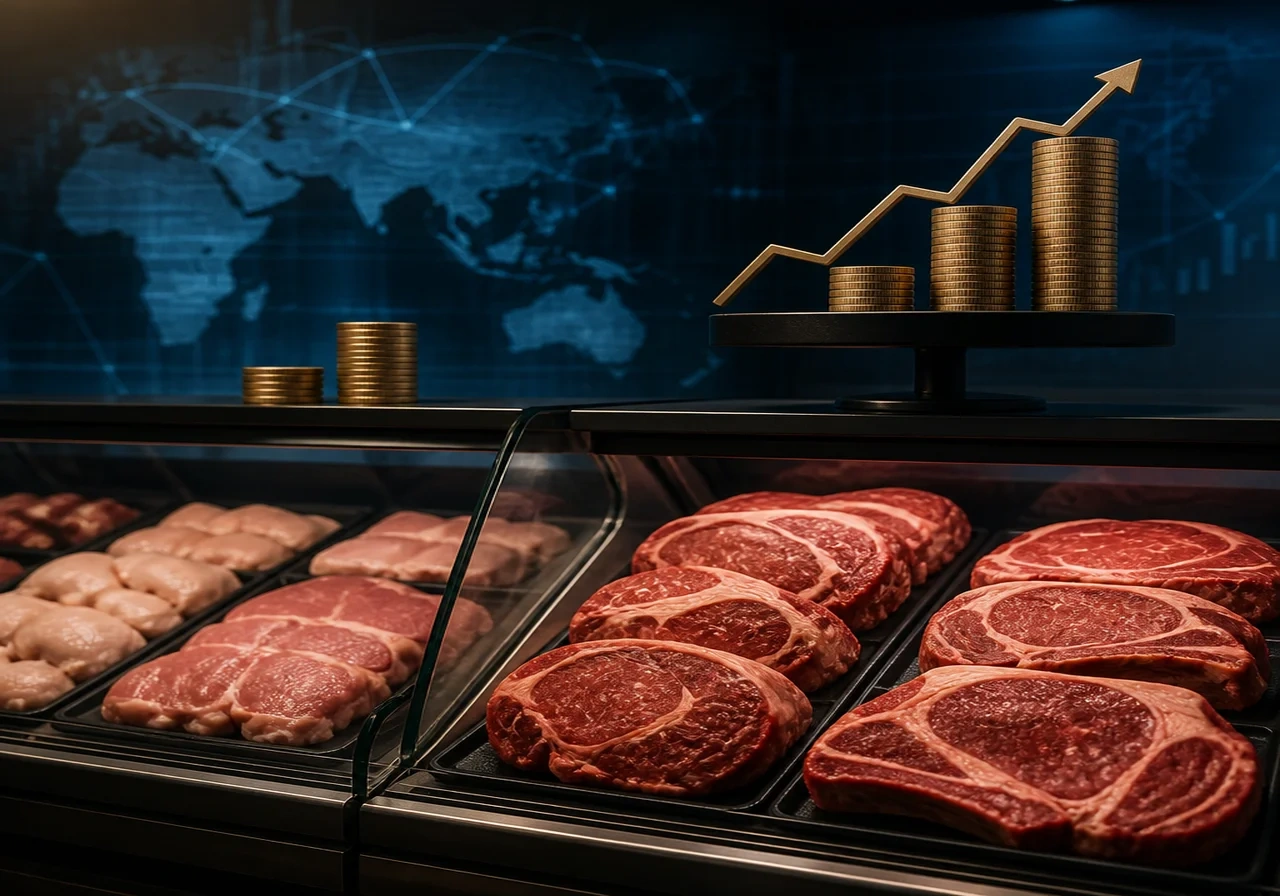
While official commodity pricing trackers report varied prices depending on the cut and region, the direction is unmistakable: wholesale beef cost indexes have been pushing higher since late February. Feedlots, processors, and distributors are all passing along rising costs, and the end buyer — the person in the grocery aisle — is starting to feel the pinch.
Energy Costs Are Driving Up Wholesale Beef Prices
If you want to know why boxed beef costs more, start with oil. The same fuel price spike that pushed one airline into bankruptcy in late March is now adding cost to every mile a refrigerated truck travels. Diesel is the lifeblood of beef distribution, and when crude jumps, the price of moving a pallet of vacuum-packed ribeyes jumps with it.
Jet fuel prices briefly spiked from $2.50 per gallon on February 27 to $3.95 on March 5 before settling to $3.40 on March 10 — still more than a third above prewar levels.
As we explored in our analysis of oil markets, the closure of the Strait of Hormuz after the outbreak of the Iran war has disrupted about a fifth of the world’s oil supply. That’s not just a line on a geopolitical chart — it shows up in the cost of running farm equipment, producing fertilizer, and keeping slaughterhouses humming. All of those energy threads weave together into the wholesale beef price you see quoted today.
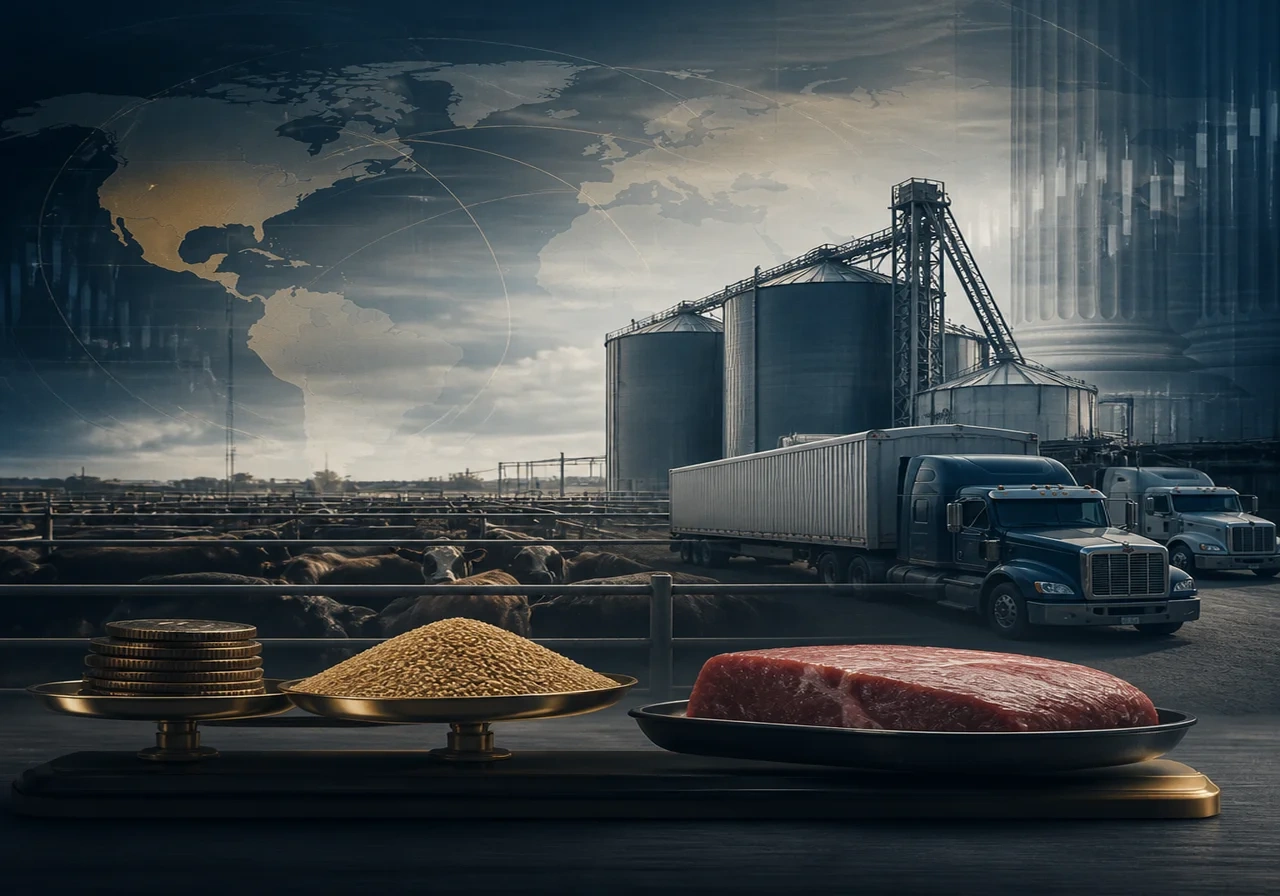
Fuel is an airline’s second-largest cost, but it’s also the silent partner in every beef supply chain. When a trucker shells out 50% more for a fill-up, that expense doesn’t vanish. It lands on the packing plant, then the distributor, and eventually on the grocery store shelf. This isn’t speculation — it’s the mechanical reality of beef market trends right now.
How Inflation and Plummeting Consumer Sentiment Affect Beef Markets
Energy costs aren’t the only force pushing boxed beef higher. Broad inflation has been simmering since the pandemic, and fresh data shows it’s far from contained. The University of Michigan’s Consumer Sentiment Index plunged to 44.8 in May 2026 — the lowest reading since the survey began in 1952. To put that in perspective, only 48.2 was expected, and April’s figure was already a somber 49.8.
What does this have to do with beef? Everything. When confidence craters, people don’t stop eating, but they do change how they shop. The survey found 57% of consumers spontaneously mentioned that high prices were eroding their personal finances, up from 50% the month before. That’s not a fleeting complaint; it’s a foundational worry.
“The cost of living continues to be a first-order concern,” said Joanne Hsu, director of the Surveys of Consumers. “Lower-income consumers and those without college degrees posted particularly strong sentiment declines; these groups are more sensitive to increases in the cost of gas and other essentials.”
And while sentiment might seem like a soft measure, long-run inflation expectations tell a harder story. Consumers now expect prices to rise at an annual rate of 4.8% over the next year and 3.9% over the next five to ten years. That upward shift in long-run expectations — from 3.5% in April — is especially worrying because it can become self-fulfilling: if everyone assumes costs will keep climbing, businesses feel less pressure to hold the line, and workers demand higher wages, feeding the cycle.
The data visualization below (Figure 1) maps this recent deterioration. It’s not just that beef is more expensive; it’s that shoppers are telling researchers, loudly and with record-breaking clarity, that they can’t keep up. That pressure doesn’t immediately force boxed beef prices down — demand for beef remains stubborn — but it does squeeze the margins of everyone in between.
What This Means for Your Grocery Bill
Wholesale beef prices don’t instantly become retail price tags. There’s a lag — sometimes weeks — as packers fill contracts and retailers work through inventory. But the direction is set. When boxed beef climbs, grocers eventually have to pass that cost on or sell at a loss. The latter rarely happens for long.
You can already see the pattern in related sectors. Airfares, which are also sensitive to fuel, jumped 6.5% in January alone before the Iran war even began, and carriers have since added surcharges. Beef isn’t exempt from the same logic. The commodity pricing signals are clear: the input costs that make a pound of ground chuck are up, and those costs are spreading through the pipeline.
For the average household, this means the summer grilling season comes with sticker shock. High beef prices may push some shoppers toward chicken or pork, but the overall protein market has been tighter. The reality is that a confluence of expensive feed, costly fuel, and persistent inflation is reshaping what it means to eat beef affordably.
Beef Market Trends: Can Prices Come Back Down?
The honest answer is nobody knows for certain. If energy markets stabilize and the Strait of Hormuz reopens to normal commercial traffic, diesel and gasoline could retreat, removing one big layer of cost. But inflation expectations are already embedded, and the psychology of higher prices is hard to unwind. Feed costs, driven in part by global grain markets and weather patterns, may not cooperate either.
Analysts point to the fact that while consumers are hurting, beef demand has not collapsed — it’s just under strain. That gives suppliers room to maintain elevated prices, especially heading into peak summer demand. The University of Michigan report did offer one hopeful signal: expectations for the labour market are holding up. If jobs stay solid, people keep buying, but they’ll likely cut back on higher-priced items first, which could gradually soften wholesale beef prices later in the year.
Still, any forecast is fragile while geopolitical tensions simmer and oil trades at elevated levels. Beef market trends in 2026 are being written by events far from the pasture.
Conclusion
Boxed beef prices today are not rising in a vacuum. They are being lifted by a rare alignment of forces: an oil shock that has made transportation and processing more expensive, stubborn inflation that keeps general costs rising, and a consumer mindset that is increasingly pessimistic about the ability to afford life’s basics. The record low in consumer sentiment isn’t just an abstract statistic; it’s the sound of millions of households recalculating their grocery lists.
While wholesale beef prices could eventually ease if fuel costs retreat and supply chains recalibrate, the near term looks tight. The data suggests that the pain at the meat counter will persist through the summer, and any relief will depend on global events that are, by their nature, unpredictable. For now, the cost of a steak is as much a story about geopolitics and inflation as it is about cattle.
The lesson for consumers isn’t comforting: the era of cheap beef may be pausing for a while, and the reasons are deeply tangled in the machinery of the modern economy. Until the energy pressure releases, the price tag on that pack of ribeyes will keep telling the same hard truth.
Frequently Asked Questions
Why are boxed beef prices rising?
Boxed beef prices are rising primarily due to higher input costs, including feed, fuel, and labor. The Iran conflict has driven up oil prices, increasing transportation costs for cattle and beef. Additionally, persistent inflation has raised feed and processing costs, which are passed down the supply chain. Consumer demand for beef remains relatively strong, but these supply-side pressures are pushing wholesale prices higher.
How do oil prices affect beef costs?
Oil prices affect beef costs in several ways: they influence the cost of diesel for transporting cattle and beef products, as well as the price of fuel for farm equipment and processing plants. Fertilizer and feed production also rely on energy inputs. When oil prices spike, as seen after the Iran war, these costs increase, ultimately raising the price of boxed beef at the wholesale level.
Will boxed beef prices come down soon?
It's uncertain. If oil prices stabilize and supply chain disruptions ease, some relief may occur by late 2026. However, ongoing inflation and potential further geopolitical tensions could keep prices elevated. The USDA and industry analysts expect wholesale beef prices to remain high through the summer grilling season, with a possible gradual decline if feed costs moderate.
What is the difference between boxed beef and retail beef prices?
Boxed beef refers to wholesale cuts of beef that are vacuum-packed and shipped to retailers, restaurants, and processors. Retail beef prices are what consumers pay at the grocery store. Boxed beef prices are a key driver of retail prices, but retailers may absorb some cost increases or adjust margins. Typically, changes in boxed beef prices take a few weeks to appear at the meat counter.
How does consumer sentiment relate to beef prices?
Consumer sentiment reflects how confident people feel about the economy and their finances. When sentiment is low, consumers may cut back on expensive purchases like beef, shifting to cheaper proteins. However, beef prices have remained high due to supply constraints, creating a situation where demand is pressured but prices stay elevated. The record low sentiment in May 2026 signals that consumers are feeling the pinch of higher food costs.