Critical Metals Corp Stock Analysis: Why Lithium and Rare Earths Are Front and Center
Critical metals are the quiet backbone of the modern economy. They go into electric vehicle batteries, the magnets in wind turbines, the chips powering artificial intelligence, and the screens on practically every device we use. And as that demand swells, a handful of small mining companies are stepping into a spotlight once reserved for oil majors and copper giants. One of the names drawing attention is Critical Metals Corp — trading under the ticker CRML. This critical metals corp stock analysis unpacks what the company actually owns, where it fits in the broader race for strategic metals, and what real-world factors could shape its trajectory.
The conversation around critical metals investing has grown louder as governments from Washington to Brussels try to lock down supply chains they used to take for granted. Lithium for batteries. Rare earth elements for defense and electronics. A company that can move a deposit from the ground to a refinery in a geopolitically friendly location earns a rare kind of leverage in a supply-constrained market. That’s the theory behind Critical Metals Corp’s appeal. But between the theory and the reality sit the rocks, the permits, and the balance sheet.
What Exactly Is Critical Metals Corp?
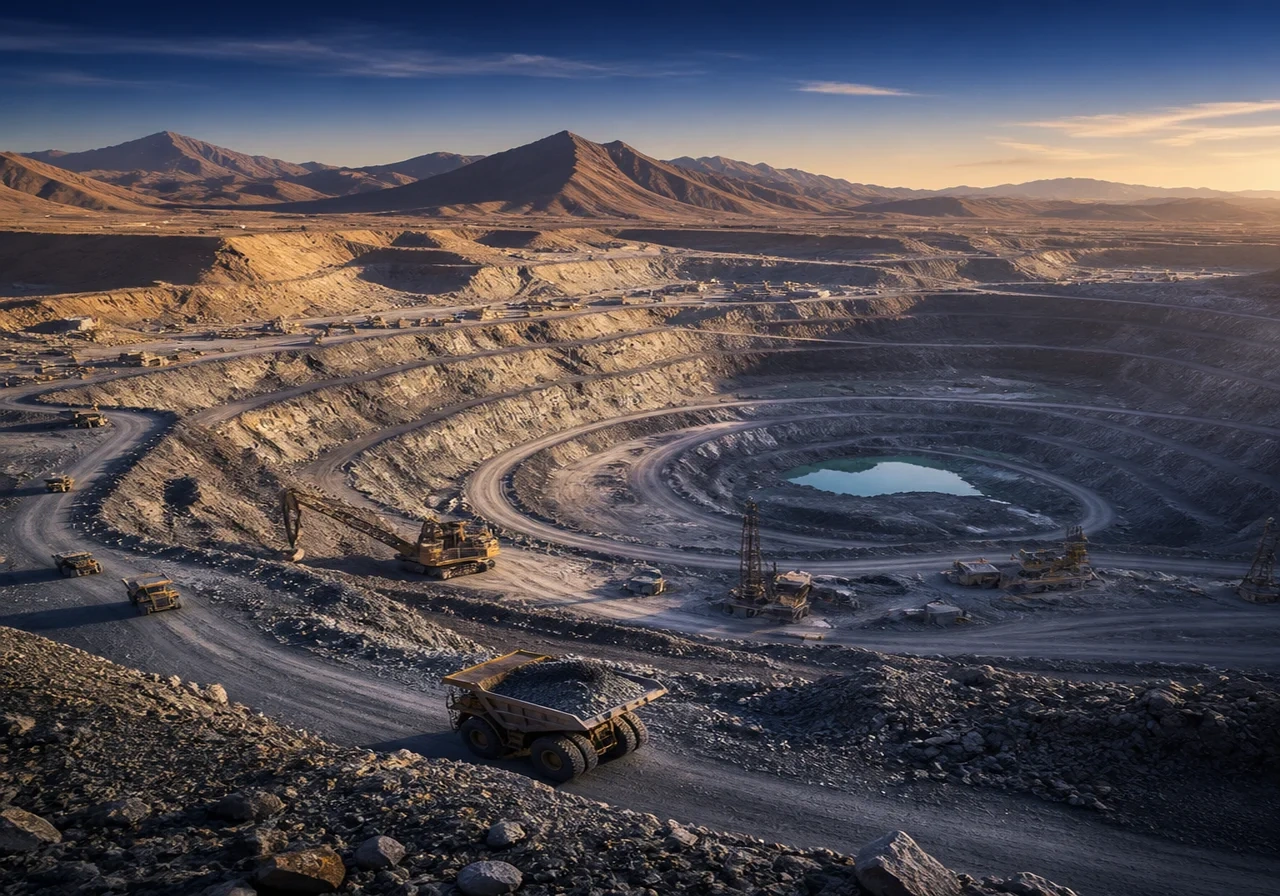
At its core, Critical Metals Corp is a mining exploration and development company focused almost entirely on two assets: the Wolfsberg lithium project and the Tanbreez rare earth project. It does not yet generate revenue from mining operations, which is common for firms in this stage of the lifecycle. The company’s future hinges on advancing these projects past feasibility studies and into production — a path that requires enormous capital, stable regulatory backing, and steady commodity prices.
The table below this article outlines the key details of both projects. In short, Wolfsberg is a hard-rock lithium deposit in Europe, designed to eventually produce battery-grade lithium hydroxide. Tanbreez, meanwhile, holds a significant concentration of rare earth elements, the group of seventeen metals used in everything from smart phones to missile guidance systems. Owning projects on two continents gives the company a kind of dual exposure: one to the battery revolution, another to the defense and high-tech supply chain.
That geographic split also introduces complexity. European lithium projects, while closer to end-users like EV factories in Germany, face their own permitting arcana. Greenland’s resource politics are equally delicate. For CRML stock, these are not static assets but long-term puzzles under layers of government interest. The basic question is whether the company can solve them before someone else does.
What’s Driving Demand for the Metals CRML Targets?
To weigh a company like this, you have to understand the demand story behind the minerals it hopes to sell. And that story has rarely been as energetic as it is today.
Start with lithium. Battery makers can’t get enough of it. The global pivot toward electric vehicles has pushed automakers to lock in supply contracts with miners years ahead of actual production. Energy storage systems for the grid — huge batteries that smooth out the intermittency of solar and wind — add yet another layer of demand. The data visualization in Figure 1 below maps out projected lithium demand growth through the end of this decade. The trendline is striking.
Rare earth elements, particularly neodymium and praseodymium (often bundled as NdPr), are essential for the powerful permanent magnets used in EV motors and offshore wind turbines. A single direct-drive wind turbine can use hundreds of kilograms of rare earth magnets. And as we explored in our coverage of how AI is reshaping the energy business, the surge in data center construction is pushing electricity consumption to new highs. That, in turn, makes renewable power and the raw materials behind it even more valuable. Rare earth stocks, as a category, have become a proxy for the acceleration of everything electric.
Add the defense angle. Governments don’t want to depend on a handful of foreign processors for the metals inside fighter jets and communications gear. The U.S. and EU have both created lists of “critical” minerals and are backing projects that promise to bring processing capacity home. Any company that genuinely moves a rare earth project toward domestic processing plays into that narrative.
But be careful: the story can get ahead of the rocks. The recent memory chip supply squeeze covered in our analysis of the RAMpocalypse showed how fragile tech supply chains can be, and how sudden price movements can scramble even well-laid project economics. The same volatility applies to strategic metals. A project that looks brilliant at one lithium price can look stranded six months later.
CRML Stock Price and Financial Snapshot: The Numbers That Matter
Critical Metals Corp is a small-cap stock, and that brings both upside potential and a corresponding jolt of risk. As of the most recent trading day, shares were priced at $9.92, up 1.64%, with after-hours movement adding a modest $0.02. The stock’s trading range historically has been wide, reflecting the kind of speculative interest and low liquidity that often characterize junior miners.
One financial detail that demands attention: the company has not yet reported revenue from mining. That means the share price right now is a bet on what those assets might be worth in the future — not on cash flowing in today. Investors should understand that exploration-stage miners are structurally dependent on capital markets. If commodity prices dip or credit tightens, funding can dry up, leaving projects in limbo.
On the cost side, developing a lithium mine is a multi-hundred-million-dollar exercise. The same goes for a rare earth processing facility. CRML will likely need strategic partnerships, government loans, or equity raises to push either project across the finish line. That’s not unusual — most mines are built with a mix of capital sources — but it does mean dilution or balance-sheet strain could enter the picture before any payday arrives.
Risks and Counterarguments That Refuse to Go Away
For every reason to be optimistic about critical metals investing, there is a counterargument that deserves air.
Project Execution Risk. A lithium deposit on a map is not the same as a working mine. Permitting can take a decade in some jurisdictions. Community opposition, environmental reviews, and technology challenges can chew up timelines. Even established mining companies stumble; for a junior like Critical Metals Corp, one major delay could be existential.
Commodity Price Swings. Lithium and rare earth prices can cycle just as painfully as any other mined commodity. A flood of new supply from a large producer — or a slowdown in EV adoption — could push prices down right as CRML is trying to finance construction. That’s a timing risk that no press release can erase.
Geopolitical Sensitivity. Tanbreez sits in Greenland, a territory with its own political dynamics and a watchful eye from major world powers. Mining projects there carry an extra layer of diplomatic and regulatory complexity. While that can sometimes attract government backing, it can also become a magnet for delays and political friction.
Concentration of Assets. With only two main projects, CRML’s future is not diversified in the way a large miner’s might be. If one project stalls, the company loses a huge chunk of its potential value. That concentrated bet is something to weigh carefully against any rosy demand forecasts for strategic metals.
Analyst Perspectives and the Longer View
Coverage of CRML stock is thin, as is typical for a company of its size. But the broader analyst conversation around rare earth stocks and lithium developers offers some framing. Many commodity research houses expect electric vehicle sales to more than double toward the end of this decade, pushing lithium demand to levels that current mine supply simply cannot meet. The gap between projected demand and actual planned production is the core argument that draws capital into the sector.
For rare earths, the push to build non-Chinese processing capacity is real and well-funded. Both the U.S. Department of Defense and the European Commission have earmarked significant funds for domestic critical mineral projects. If CRML can position Tanbreez as part of that supply chain, the project could attract the kind of patient capital that junior miners rarely see.
None of this guarantees success. Mining is an industry littered with projects that almost made it. The job of a sober observer — rather than a cheerleader — is to track the actual milestones: permit approvals, offtake agreements, construction financing. That’s where the difference between a promising idea and a productive mine will become visible.
Conclusion
Critical Metals Corp sits squarely at the intersection of two powerful long-term trends: the electrification of transport and the re-shoring of strategic mineral supply chains. Its lithium and rare earth projects target materials that governments and industries are scrambling to secure. That rare alignment gives the company a narrative that resonates far beyond a typical penny-stock mining play.
But the distance between a promising deposit and a cash-generating mine is measured in years, not months, and in hundreds of millions of dollars. CRML stock currently reflects the promise, not the execution. For anyone following rare earth stocks or dipping into critical metals investing, the real work lies in watching whether this company can convert its geological assets into industrial reality — on time, on budget, and at a price that still makes sense when the rock hits the crusher. No amount of market enthusiasm can substitute for that. This analysis provides a factual overview of the company’s position and is not a recommendation to buy, sell, or hold any security.
Frequently Asked Questions
What is Critical Metals Corp?
Critical Metals Corp is a mining company focused on the exploration and development of lithium and rare earth element projects. Its flagship assets include the Wolfsberg Lithium Project in Austria and the Tanbreez Rare Earth Project in Greenland, both of which are strategically positioned to supply critical minerals for clean energy and technology sectors.
What is the Wolfsberg Lithium Project?
The Wolfsberg Lithium Project is a hard-rock lithium deposit located in Carinthia, Austria. It is one of the most advanced lithium projects in Europe, with a feasibility study indicating potential for producing battery-grade lithium hydroxide. The project aims to support the European Union's goal of securing domestic supplies of critical raw materials for electric vehicle batteries.
How is CRML stock performing?
As of the latest data, CRML stock trades at $9.92 with a 1.64% increase on the day. The stock has seen volatility tied to news about critical metals policy and project milestones. Investors should monitor company filings and commodity price trends for a fuller picture of performance.
What are the risks of investing in Critical Metals Corp?
Risks include project development delays, geopolitical challenges (e.g., Greenland's regulatory environment), permitting hurdles, and dependence on volatile commodity prices. Additionally, the company has not yet generated revenue from mining operations, making it a high-risk venture that requires significant capital expenditure.
What is the outlook for critical metals like lithium and rare earths?
Demand for lithium and rare earth elements is expected to grow strongly due to the global energy transition, electric vehicle adoption, and demand from AI and data centers for advanced electronics. However, supply chain constraints and geopolitical tensions could create price volatility. Critical Metals Corp is positioned to benefit from these trends if its projects advance successfully.