ECB Issues Stark Warning on Iran War Financial Risks
The European Central Bank has delivered its bluntest warning yet: military conflict between the United States and Iran, ordered by President Donald Trump, threatens to trigger a full-scale financial crisis. In a series of remarks and updated scenarios, ECB President Christine Lagarde made clear that the energy-driven shock is not a temporary market blip. It is a structural threat to global stability — and markets are starting to price in the consequences.
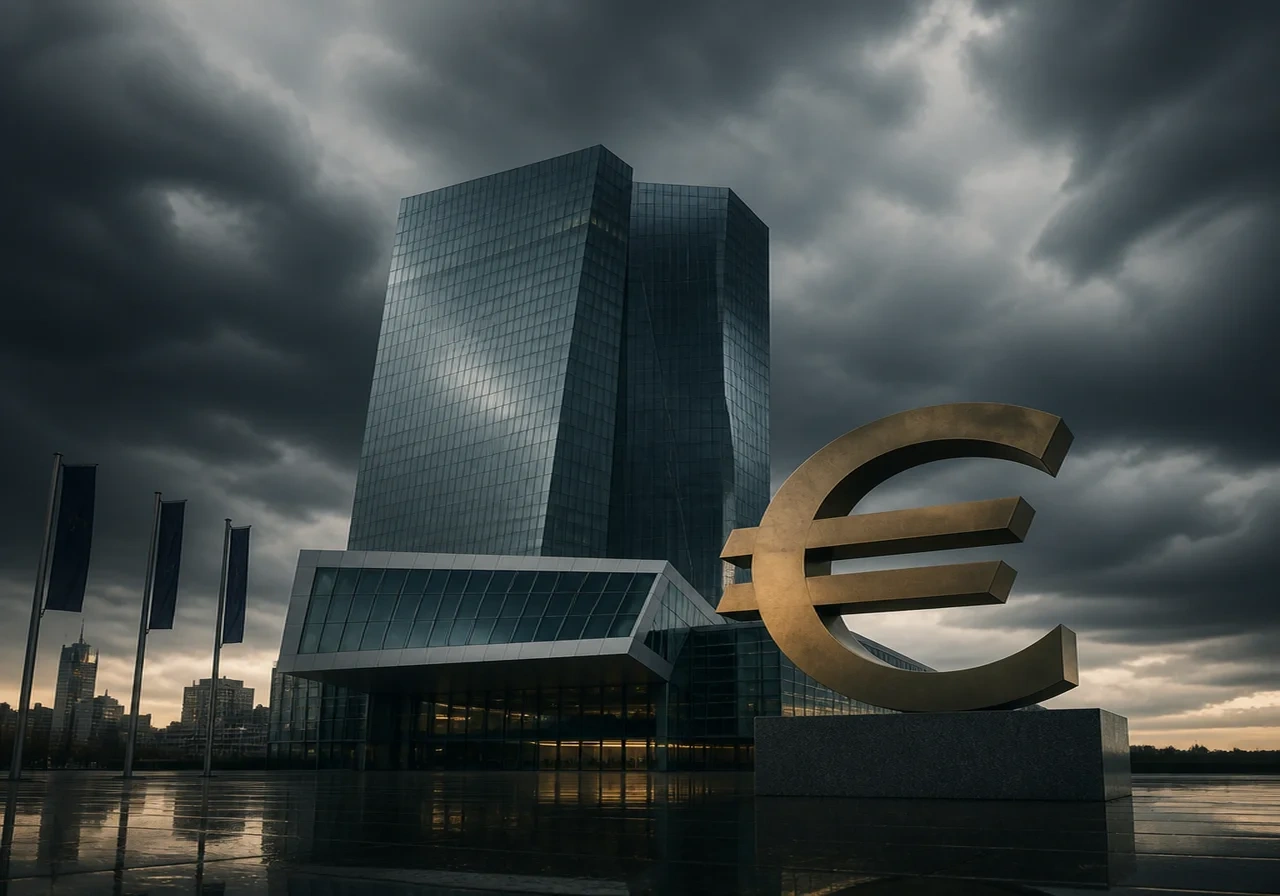
The warning from Frankfurt, expressed in public speeches and internal policy discussions, reflects a deep fear that the combination of soaring oil prices, fractured supply chains, and a sudden loss of economic confidence could replicate the dynamics of past crises. With Europe still nursing scars from the energy crisis tied to Russia’s invasion of Ukraine, the region’s vulnerability is acute. As Lagarde put it, there is “no way” the Gulf’s lost energy supply can be restored within months — and the disruption may last years.
Geopolitical Risk and Financial Markets: How the Conflict Spreads
Wars have never been kind to financial markets, but the channels through which this particular conflict is transmitting shock are especially potent. The primary trigger is oil. When the Strait of Hormuz — a narrow waterway through which roughly a fifth of the world’s oil passes — became a contested zone, global energy benchmarks went into overdrive. As the data visualization below (Figure 1) shows, oil and jet fuel prices have climbed at breakneck speed, from already elevated levels.
Yet oil is only the first domino. The broader mechanism works like this: energy costs surge, factories and transport operators pass those costs on to consumers, inflation expectations jump, and central banks feel compelled to raise interest rates. Higher rates then squeeze borrowers, depress asset prices, and raise the cost of servicing government debt. In a fragile global economy, that sequence can quickly turn a supply shock into a demand crisis — the classic ingredients for a recession.
Oil Price Shock and Its Ripple Effects on Global Economy
The numbers are staggering. Since the conflict erupted in late February 2026, Brent crude futures have shot up by about 50 percent, breaking above $100 a barrel. The spot price for immediate oil delivery doubled to $141. But the most dramatic move has been in jet fuel, where the benchmark for cargo deliveries into northwestern Europe surged more than 120 percent. Airlines, for whom fuel can account for up to a quarter of operating expenses, are feeling the heat immediately.
Airlines across the world have already taken emergency action. Spanish low-cost carrier Volotea brought in a pricing clause that can slap a post‑purchase surcharge of up to 14 euros on every passenger per flight. Canada’s WestJet tacked on a C$60 fuel surcharge for some bookings. In India, Akasa Air added fuel levies of up to 1,300 rupees. Beyond surcharges, carriers are trimming capacity: Air Transat cut its planned seat supply by six percent for the summer season. These moves are not just inconveniences for travelers; they are early warning signs of a broader corporate scramble to protect margins, and they herald a squeeze on consumer spending power that will ripple through the entire economy.
The bond market, as always, is the unforgiving arbiter. European government bond yields have shot to 15-year highs, with shorter-term rates rising fastest — a pattern analysts call a “bear flattening” that signals recession fears. The moves were amplified after Lagarde’s blunt assessment that the energy shock will not be brief. In a credit-dependent world, rising yields immediately raise the cost of mortgages, business loans, and sovereign debt. For highly indebted euro‑area countries, that arithmetic gets dangerous fast.
Central Bank Warning: What the ECB Said and Why It Matters
The ECB’s public statements have been unusually direct. In an interview with The Economist, Lagarde dismissed market hopes of a swift return to normal. “We are between the baseline and the adverse scenario,” one UBS strategist said, describing the bank’s own internal forecasts. Markets are now pricing in a greater than 90 percent chance that the ECB will raise interest rates by June — a move that would have been unthinkable before the war, when euro‑zone inflation had just dipped to 1.9 percent. The war has turned disinflation on its head.
What makes the ECB’s warning especially consequential is its dual role. The central bank is not only the guardian of price stability but also the euro zone’s financial stability backstop. If the bond sell‑off accelerates or a major institution faces liquidity trouble, the ECB would be forced to intervene — possibly by buying government debt again or providing emergency loans to banks. But that would put it in the impossible position of fighting inflation with one hand while pumping money into the system with the other, undermining its own credibility.
A Financial Crisis Scenario: Could History Repeat?
To understand why ECB officials are losing sleep, look no further than the United Kingdom in September 2022. Back then, a government tax‑cut plan — tiny in scale compared to the trillions at stake today — triggered a bond market rebellion. Yields on UK government bonds spiked nearly two full percentage points in a matter of days, forcing the Bank of England to stage an emergency intervention to prevent pension funds from collapsing. Prime Minister Liz Truss resigned after just 45 days in office. The episode, often blamed on “bond vigilantes” — investors who sell government debt to punish what they see as reckless fiscal policy — showed how quickly market discipline can topple a political regime.
Today’s situation carries echoes of that crisis, but on a far larger canvas. Instead of a single domestic policy misstep, the euro zone faces a continent‑wide energy shock that is simultaneously raising import bills, fuelling inflation, and fanning fears about debt sustainability. US consumer sentiment has already plunged to record lows; households’ long‑run inflation expectations have climbed to 3.9 percent, the highest in seven months. An energy price spiral that crushes consumption could easily tip several economies into recession. And once a recession takes hold, credit defaults multiply, bank balance sheets weaken, and the line between an economic downturn and a financial crisis blurs.
There is also the unnerving parallel to the 1973 oil embargo, when a supply shock triggered a decade of stagflation — stagnant growth combined with high inflation. Today’s central banks, committed to inflation targeting, might be better equipped, but their toolbox is finite. The ECB’s baseline assumes that the conflict remains contained and energy flows are gradually restored. If, instead, the disruption deepens, the central bank’s severe scenario — which Lagarde has hinted could involve even sharper rate hikes — would start to look like a self‑fulfilling prophecy, squeezing the economy exactly when it needs support.
Conclusion
The ECB’s warning is not a rhetorical alarm; it is a serious assessment rooted in hard numbers and painful historical precedent. A regional war in the Gulf is sending tremors through every corner of the global financial system, from the pump to the boardroom to sovereign bond auctions. What makes this moment especially precarious is that the forces in motion — energy prices, inflation psychology, and market contagion — are tightly coupled and mutually reinforcing. Once they start to spin, it becomes extraordinarily difficult to pull them apart without breaking something.
Resilience can never be taken for granted. While central banks learned lessons from past crises and have — on paper — stronger tools, the margin for error disappears when confidence evaporates. The world now finds itself at a hinge point: a durable diplomatic path to de‑escalation could let the global economy catch its breath, but a protracted conflict could easily do what the International Monetary Fund has long warned about — turn geopolitical turmoil into a financial inferno. For policymakers and citizens alike, the coming months will be a brutal test of whether the system is truly shockproof or simply waiting for the next crack.
Frequently Asked Questions
What did the ECB warn about the Iran war?
The European Central Bank warned that Donald Trump's military conflict with Iran could trigger a major financial crisis. ECB President Christine Lagarde stated that the disruption to energy supplies and resulting market turmoil posed severe risks to economic stability, comparing the situation to past crises.
Could the Iran war cause a financial crisis?
Yes, the ECB and other analysts warn that the war could lead to a financial crisis through multiple channels: a sustained oil price shock, a spike in government bond yields, a collapse in consumer confidence, and forced central bank rate hikes that could tip economies into recession. The combination of these factors makes a systemic crisis a real possibility.
How does the oil price shock from the Iran war affect financial markets?
The oil price shock raises input costs for businesses, reduces consumer spending power, and increases inflation expectations. This forces central banks to raise interest rates, which in turn depresses asset prices and increases borrowing costs. The result is increased volatility in stock, bond, and currency markets, often leading to capital flight from riskier assets.
What is the ECB's role in preventing a financial crisis?
The ECB monitors financial stability and uses its monetary policy tools to manage inflation and support growth. In response to the Iran war, it may adjust interest rates, provide liquidity to banks, or communicate forward guidance to calm markets. However, its ability to prevent a full-blown crisis is limited if the conflict escalates and disrupts global supply chains.