The Strait of Hormuz: A Vulnerable Chokepoint
Imagine a narrow waterway barely 33 kilometres wide at its tightest point, through which one out of every five barrels of the world's oil and gas passes daily. That's the Strait of Hormuz — the maritime crossroads between the Persian Gulf and the open ocean. When tensions erupt in the Middle East, this choke point becomes the global economy's most exposed nerve.
The Iran war has done exactly that. Since hostilities began, oil tankers have faced threats, delays, and soaring insurance costs, disrupting the flow of crude that underpins petrol prices from Brisbane to Berlin. As the Climate Council notes, about one fifth of all internationally traded petroleum flows through these waters. Any bottleneck here doesn't just nudge energy markets — it wrenches them.
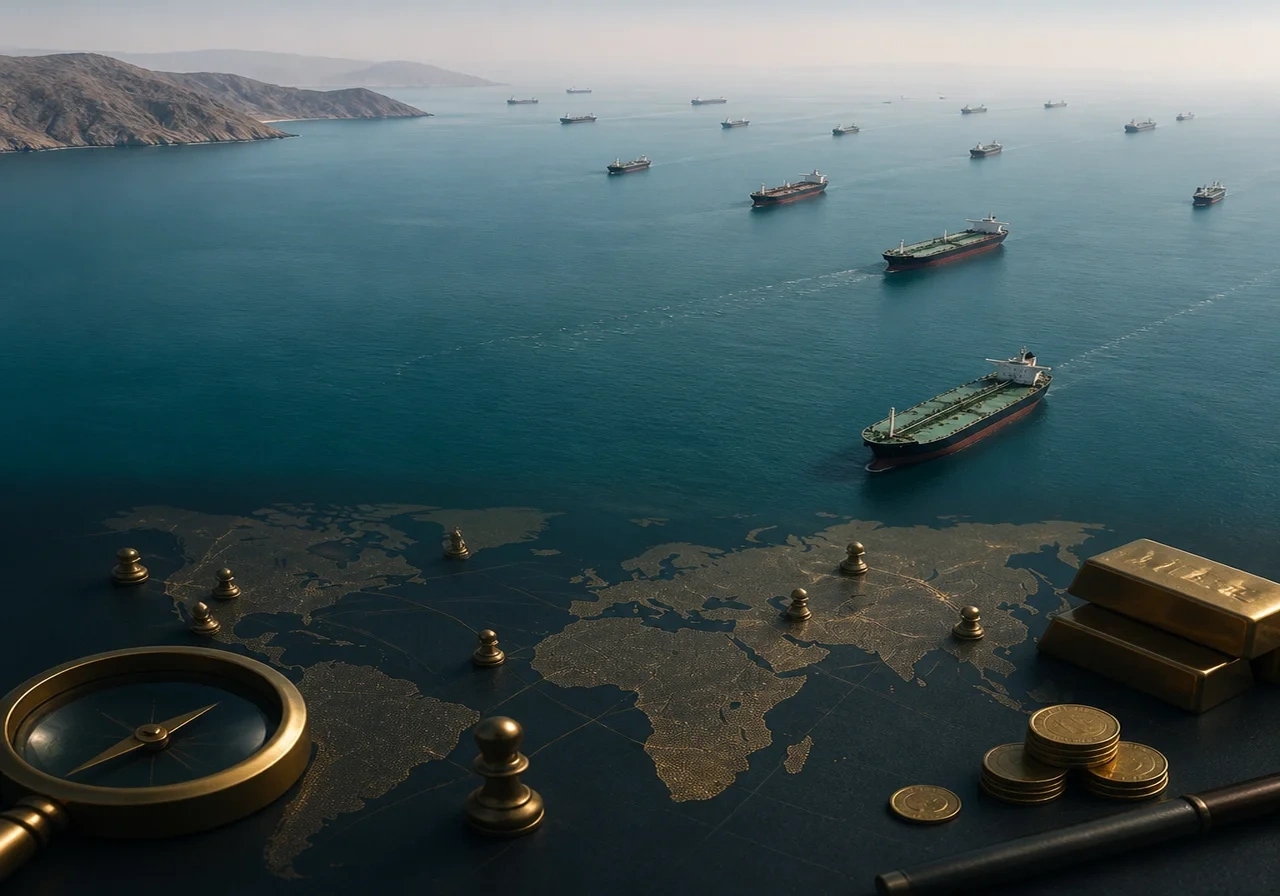
When supply is squeezed and demand stays stubbornly high, prices climb. And they have climbed fast. Brent crude, the global benchmark, shot from roughly $70 per barrel before the war to peaks above $119, jolting petrol, diesel, and jet fuel costs everywhere. Our 100-day war impact tracker showed how quickly the price ladder snapped upward.
From Crude Oil to Petrol: The Transmission Mechanism
The path from an oil well in the Gulf to the fuel gauge in your car isn't mysterious, but it's surprisingly sensitive to geopolitical tremors. Refineries turn crude into petrol, diesel, and jet fuel. When crude prices jump, the cost to make those finished fuels jumps with them. Add in shipping disruptions, higher insurance, and longer tanker routes, and the price tag at the pump amplifies even a modest supply interruption.
Australia, for example, imports more than 90% of its refined petrol and diesel. With national fuel reserves equivalent to just 36 days of consumption — well below the international benchmark of 90 days — the country has almost no buffer when global markets spasm. In the first months of the Iran war, petrol prices in Sydney, Melbourne, and Brisbane already brushed against $2.20 a litre, with half of service stations in those cities charging near that level.
Economists modelling a prolonged conflict expect retail fuel prices to rise by between 25 cents and $1 per litre, piling an extra $9 to $35 per week onto the average household's fuel bill. For families already stretched by grocery and housing costs, that's not a hidden spike — it's a direct punch to the budget.
“When fossil fuel supply is threatened, prices spike and Australians pay.”
Hidden Costs: Airline Surcharges and Capacity Cuts
Petrol prices aren't the only cost seeping into everyday spending. The ripple hit airlines almost immediately, revealing a stealthier transmission of war-driven fuel inflation. Jet fuel, which typically accounts for up to a quarter of an airline's operating expenses, has nearly doubled from $85-$90 per barrel before the conflict to $150-$200 per barrel, Reuters reports. No carrier can swallow that without raising fares or trimming services.
A new layer of "fuel surcharges" has appeared on ticket prices worldwide. Spanish low-cost carrier Volotea now adds up to €14 per passenger per flight based on fuel costs. Canada's WestJet tacks on a C$60 surcharge to some bookings. Even India's Akasa Air levies between 199 and 1,300 rupees ($2 to $14) on domestic and international trips. These charges often show up after you've chosen your fare — a hidden tax on travel that most passengers notice only at checkout.
The pain isn't just financial; it's shrinking options. Canada's Air Transat cut 6% of its planned capacity from May to October, slashing routes to Europe and the Caribbean. As our deep dive on Air New Zealand's fuel cost crunch showed, when fuel eats a quarter of your budget, flying fewer seats becomes a survival move. Less competition and fewer flights mean even higher ticket prices — a double blow for consumers.
Broader Economic Fallout: Inflation and Central Bank Warnings
The war's energy shock is threading through the global economy in ways central bankers feared. European gas prices, for instance, doubled within weeks of the first strikes, inflating heating bills, factory costs, and electricity across the continent. Eurozone inflation jumped to 3%, according to The Guardian, well above the European Central Bank's comfort zone.
The data visualization below (Figure 1) maps how the key price spikes stack up: Brent crude soaring past $100, jet fuel doubling, and petrol in Australian cities hitting multi-year highs. These aren't abstract numbers — they feed directly into the cost of moving goods, commuting, and heating homes.
Central banks have been unusually blunt about the danger. The European Central Bank warned that the Iran war had a "material impact" on inflation, as we noted in our coverage of the ECB's financial stability warning. The IMF has cautioned that an escalation could trigger a global recession, while the US Federal Reserve finds itself in a bind: raising interest rates to fight inflation could strangle growth just as the economy stumbles from the shock.
One overlooked pressure point is the US Strategic Petroleum Reserve. Emergency releases to calm oil markets have pushed the reserve to near a 40-year low, according to WVTM 13. With that buffer shrunk, Washington has less ammunition to tame future price spikes if the conflict drags on.
Lessons from History: How Oil Shocks Reshape Economies
History is a brutal teacher when it comes to oil supply disruptions. The 1973 Arab oil embargo quadrupled crude prices and triggered recession across the West. Russia's invasion of Ukraine in 2022 jacked up petrol prices globally, forcing Australia to temporarily slash its fuel excise from 44 cents to 22 cents per litre — a move that cost the government $5.6 billion in lost revenue over six months, even as retail prices still hit their highest real level since 2008.
That episode showed how temporary patches — like fuel tax cuts or direct subsidies — are costly, politically charged, and ultimately insufficient. Today's Iran conflict poses a similar threat, but with less fiscal headroom: government debts are higher, inflation is already stubborn, and central banks can't easily swoop in with cheap money.
Yet there's a structural difference this time: the push for electric vehicles and cleaner energy. In Australia, 98% of cars still burn petrol or diesel, so the immediate exposure is massive. But the take-up of EVs, while still behind global leaders, offers a long-term escape route from oil-price tyranny. The more households and fleets switch, the less wartime oil shocks can hold entire economies hostage.
Conclusion
The Iran war has turned the Strait of Hormuz into a global economic fault line, and hidden gas price spikes are just one of its many aftershocks. From petrol pumps in Australian suburbs to airline surcharges on European budget carriers, the costs are cascading faster than many official inflation measures can capture.
While markets absorb daily swings on hopes of a ceasefire, the fundamentals remain fragile. Jet fuel prices double, strategic reserves drain, and central banks sound alarms — all signals that the energy shock is still rippling outward. For consumers, the immediate lesson is not about prediction, but awareness: the surcharges, the trimmed flight schedules, the creeping pump prices are all linked to a conflict thousands of kilometres away.
Ultimately, the hidden gas price spike is a reminder that fossil fuel dependence is a strategic vulnerability. The faster the world transitions to clean energy and more efficient transport, the less power geopolitical crises will have over household budgets. In the meantime, patience and a sharp eye on the fuel surcharge line will be necessary virtues.
Frequently Asked Questions
How does the Iran war cause gas prices to spike?
The Iran war disrupts oil shipments through the Strait of Hormuz, through which about 20% of the world's oil and gas passes. This constricts global supply, driving up crude oil prices, which directly raises costs at the pump and for jet fuel.
Why are airlines adding fuel surcharges now?
Jet fuel prices have nearly doubled from $85-90 per barrel to $150-200 during the Iran war, making fuel account for up to a quarter of airline operating expenses. Carriers like Volotea, WestJet, and Akasa Air have introduced surcharges ranging from 2 to 14 euros per passenger to offset costs.
How much could gas prices rise for consumers?
Economists expect petrol prices to increase by 25 cents to $1 per litre, adding $9 to $35 per week for the average household. In Australian cities, prices are already approaching $2.20 per litre.
Is the US strategic petroleum reserve affected?
Yes, emergency oil releases have drawn the reserve down to near 40-year lows, raising concerns about the ability to buffer future price spikes if the conflict continues.
Could the Iran war cause a global recession?
Central banks and the IMF warn that a prolonged conflict could significantly increase inflation, dent economic growth, and even trigger a global recession. The European Central Bank has noted 'material impact' on inflation.