Introduction: The Alphabet $80 Billion Stock Sale to Fund AI
On a Monday evening after the markets closed, Alphabet Inc. — the parent company of Google — dropped a headline that reset expectations for Big Tech’s AI buildout. The company plans to raise $80 billion by selling new shares, with the proceeds earmarked for artificial intelligence infrastructure: data centers, specialized chips, and the electricity to power them.
For a firm that already generates nearly half a trillion dollars in annual revenue, the move isn’t a scramble for cash. It’s a declaration that the AI race is about physical scale — and that even the industry’s richest players need fresh capital to stay in front. The sale, reported by Proactive Investors, may also involve Warren Buffett’s Berkshire Hathaway as a buyer, adding a rare institutional seal of approval to a tech stock offering.
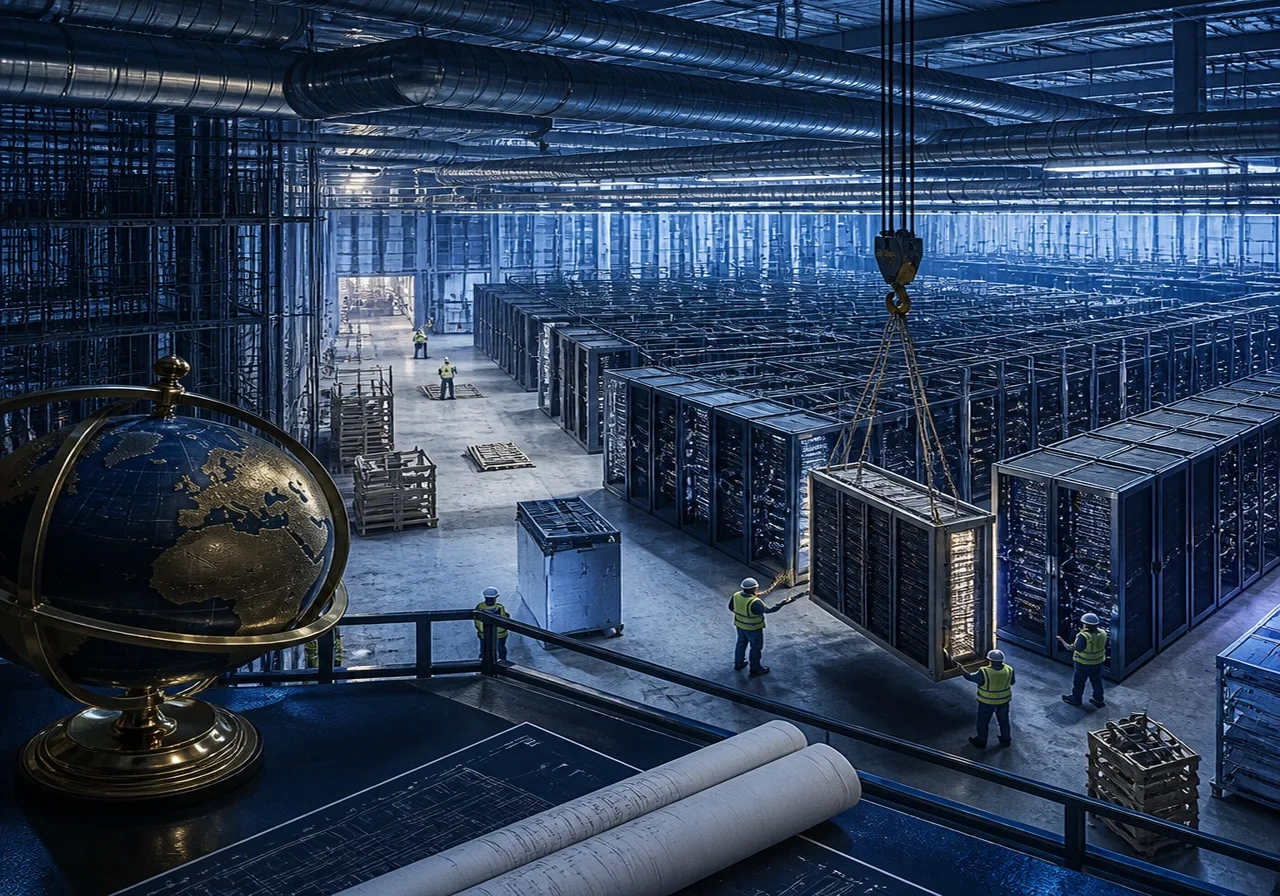
Alphabet Capital Raise: Why AI Spending Demands an $80 Billion Infusion
Training and running advanced AI models is extraordinarily expensive. The largest language models require tens of thousands of specialized chips, vast server farms, and power loads that rival small cities. As we explored in our coverage of AI’s energy impact, electricity infrastructure is now a strategic bottleneck for the entire tech sector.
Alphabet already spends north of $100 billion a year on capital expenditures, and its 2026 revenue is expected to hit $486 billion. So why raise an additional $80 billion? Because the race has intensified. Rival AI developers Anthropic and OpenAI have pulled in colossal funding rounds of their own — $65 billion and $122 billion in capital commitments, respectively. Alphabet, which is also an investor in Anthropic, has pledged up to $40 billion more into that startup. An $80 billion equity raise allows Google to accelerate its cloud and AI buildout without slowing down its other bets.
The Google Parent Equity Offering: How the Stock Sale Works
When a company issues new shares, it sells ownership stakes to investors. Existing shareholders end up owning a slightly smaller slice of the company — a dilution that often weighs on the stock price in the short term. But if the fresh capital fuels more profit down the road, long-term shareholders can come out ahead.
Alphabet’s offering is reportedly structured as a private placement, with Berkshire Hathaway among the potential buyers. The presence of Buffett’s firm is noteworthy; Berkshire rarely participates in tech stock offerings, and its involvement signals confidence in Alphabet’s long-term strategy. The $80 billion figure dwarfs many entire corporate stock sales and underscores just how much money AI infrastructure demands.

Alphabet’s Financial Strength: Cash, Debt, and Capex Capacity
Alphabet is not a company that needs to borrow. It holds roughly $100 billion in cash and marketable securities against only $20 billion in debt, according to industry analysis. That fortress balance sheet is why the company can contemplate raising fresh equity rather than piling on loans that eat into earnings.
As the data table and the bar chart in Figure 1 illustrate, Alphabet’s cash reserves and low debt sit comfortably alongside its already enormous capital spending. The $80 billion stock offering is about 80% of one year’s capex, reinforcing how the company treats AI facilities as urgent, long-lived assets. Importantly, the equity route preserves its borrowing capacity for other uses — from potential acquisitions to weathering economic downturns.
Big Tech AI Investment Arms Race: Where Alphabet Fits
Alphabet isn’t alone in pouring triple-digit billions into AI. Microsoft, Amazon, and Meta are also on a spending spree to build out cloud capacity and proprietary AI models. The scale of these investments is unprecedented. For context, CoreWeave — an AI-focused cloud provider — grew its revenue from nearly nothing to $5.1 billion in 2025, with Microsoft alone responsible for 67% of that. Projections peg CoreWeave’s 2026 revenue above $10 billion, a sign of how voracious demand is for AI compute.
Alphabet’s 2004 IPO generated a modest $3.2 billion in sales during its first public year. Two decades later, the company’s expected $486 billion in 2026 revenue places it at the center of the global economy. The GOOGL stock offering acknowledges that to remain the front-runner in AI, the Google parent must move even faster than its digitally native rivals — and that means spending on concrete, steel, and fiber optics, not just algorithms.
Frequently Asked Questions
Why is Alphabet raising $80 billion through a stock sale?
Alphabet is using the equity offering to fund AI infrastructure expansion — building new data centers, upgrading cloud computing facilities, and advancing AI research. The capital-intensive nature of the AI race, with competitors such as OpenAI and Anthropic raising billions as well, makes this infusion necessary to maintain pace.
How will the stock sale affect Alphabet’s share price?
Selling new shares dilutes existing ownership, which can put temporary pressure on the stock. However, if the market believes the raised capital will generate strong long-term returns from AI growth, sentiment could turn positive. The involvement of Berkshire Hathaway may reinforce investor confidence in the offering’s quality.
What is Alphabet’s financial position going into this sale?
Alphabet holds about $100 billion in cash and marketable securities with only $20 billion in debt. It already spends over $100 billion annually on capital expenditures. The stock sale adds liquidity without straining its credit profile, enabling faster AI investment while preserving a strong balance sheet.
How does this compare to AI spending by other big tech companies?
Alphabet’s $80 billion stock sale fits a broader pattern of massive AI spending. OpenAI raised $122 billion in capital commitments, and Anthropic raised $65 billion in a single funding round. Major cloud providers — Microsoft, Amazon, Meta — are all investing heavily to capture the AI opportunity.
What role might Berkshire Hathaway play in this stock sale?
Reports indicate that Berkshire Hathaway could be a purchaser of the newly issued shares, which would represent a notable vote of confidence from Warren Buffett’s firm. While the exact extent of Berkshire’s involvement hasn’t been finalized, its participation typically signals quality and long-term value.
Conclusion
Alphabet’s $80 billion stock sale is a milestone in the AI infrastructure buildout. It shows that even the world’s largest technology companies are pushing the limits of internal funding when faced with the sheer scale of what artificial intelligence requires. The decision to raise equity — rather than debt — reflects a deliberate choice to keep the balance sheet flexible while moving fast.
For observers, the takeaway isn’t that Alphabet is cash-strapped; it’s that the AI race is becoming a matter of physical resource allocation. Data centers, chips, and power grids are the new factories of the digital age, and the companies that build them fastest are likely to define the next decade. With $100 billion in cash already on hand and a potential boost from Berkshire Hathaway’s stamp of approval, Alphabet is positioning itself to be one of those companies.
Frequently Asked Questions
Why is Alphabet raising $80 billion through a stock sale?
Alphabet is raising $80 billion through an equity offering to fund its artificial intelligence infrastructure expansion. The capital will go toward building new data centers, upgrading cloud computing capabilities, and investing in AI research and development. The move reflects the massive capital requirements of the AI arms race, as competitors like OpenAI and Anthropic also raise billions.
How will the stock sale affect Alphabet's share price?
A stock sale typically dilutes existing shareholders' ownership, which can put downward pressure on the share price in the short term. However, if investors believe the capital will generate strong returns through AI growth, the long-term effect could be positive. The involvement of Berkshire Hathaway may signal confidence and support the stock.
What is Alphabet's financial position going into this sale?
Alphabet has a strong balance sheet with about $100 billion in cash and marketable securities and only $20 billion in debt. It already spends over $100 billion annually on capital expenditures. The stock sale adds liquidity without straining its credit profile, allowing it to accelerate AI investments.
How does this compare to AI spending by other big tech companies?
Alphabet's $80 billion stock sale is part of a broader trend of massive AI infrastructure spending by tech giants. Competitors like Microsoft, Amazon, and Meta are also investing heavily. For context, OpenAI raised $122 billion in capital commitments, and Anthropic raised $65 billion in a recent funding round. The scale underscores the industry's bet on AI.
What role might Berkshire Hathaway play in this stock sale?
According to reports, Berkshire Hathaway is involved as a potential buyer of the new shares, providing a stamp of approval from Warren Buffett's firm. This could reassure other investors about the offering's quality and Alphabet's long-term strategy. However, the exact involvement has not been detailed.