Australia’s Fuel Shortage: Causes and Market Outlook
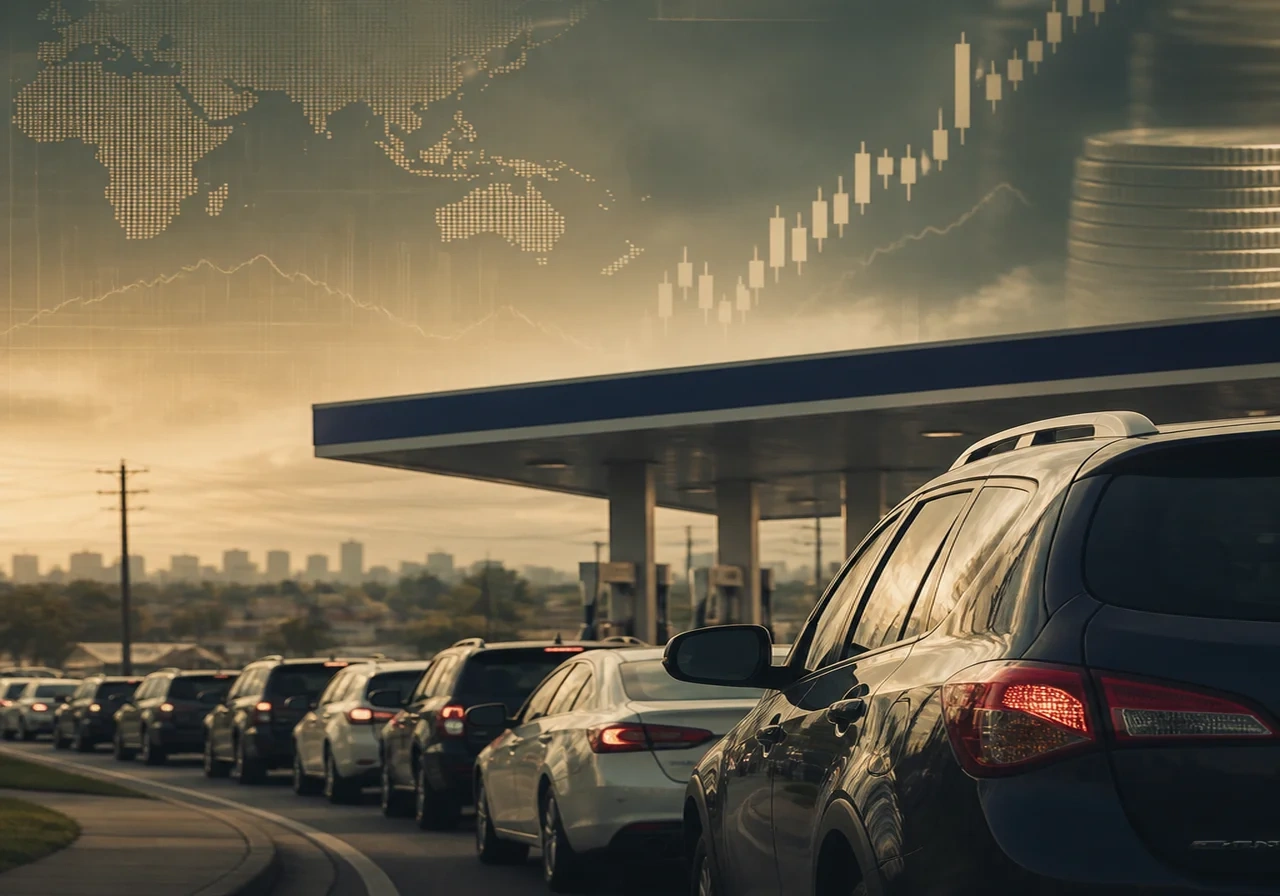
Petrol queues have returned to Australian suburbs for the first time in decades. Diesel is being rationed at some farm gates. Supermarkets are running low on fresh produce because refrigerated trucks can’t fill their tanks. The fuel shortage rattling Australia in mid‑2026 is not a temporary hiccup—it’s a full‑blown supply shock that exposes deep fault lines in how the country powers its economy.
The immediate trigger is the war in Iran and the effective closure of the Strait of Hormuz. About one‑fifth of the world’s oil moves through that narrow waterway, and when tankers stop sailing, countries that depend almost entirely on imported fuel—like Australia—feel the pain first. As we explored in our coverage of the LPG shortage, the same chokepoint disruption has already sent cooking‑gas prices through the roof in India. Now the shock has widened to petrol, diesel, and jet fuel.
“Australia imports over 90% of its refined fuel. When global oil flows seize up, our supply chain doesn’t bend—it breaks.”
The Australia Petrol Supply Disruption: Why It Happened
To understand why a conflict thousands of kilometres away can empty Australian bowsers, you need to look at two numbers: 91% and 4.
Australia imports around 91% of the refined fuel it consumes. Decades of refinery closures—Brisbane, Clyde, Kurnell—have turned the country from a crude processor into a finished‑product importer. That means when Asian refineries cut output because their own crude supplies dry up, Australia’s supply chain is starved at both ends. It’s a textbook case of import dependency colliding with geopolitics.
The number 4 is even more uncomfortable. Australia’s emergency fuel reserves hover at just 36 days of consumption, well below the 90‑day benchmark the International Energy Agency recommends. Once tankers stop arriving, the strategic buffer evaporates fast. Diesel, which powers trucks, mines, farms, and backup generators, is the most vulnerable link. With 24% of diesel going to road transport and another 24% to mining, a shortage doesn’t just raise prices—it stalls entire industries.
Panic buying magnified the disruption. As news of the Strait of Hormuz closure spread, motorists rushed to fill jerry cans and top‑off tanks, draining station storage within hours. The resulting queues and price surges were reminiscent of the early days of the 1970s oil crises, but this time the trigger was a military confrontation half a world away.
The Diesel Crisis in Australia: Ripple Effects Across Sectors
Petrol grabs the headlines, but diesel is the hidden backbone—and it’s the fuel under the most pressure. Farm machinery, grain trucks, milk tankers, and mining haulpaks all run on diesel. When the price at the pump more than doubles, the cost spirals through the entire economy.
In wholesale markets, diesel prices jumped 67% soon after the Strait of Hormuz closed. Retail prices in some regional towns climbed even higher—well over $3 per litre—making it impossible for small trucking businesses to operate without emergency surcharges. Freshfood distributors reported that a single run from a Victorian market garden to Sydney cost an extra $800. Some operators simply stopped driving.

The aviation sector, already reeling from the jet fuel surge we documented in our analysis of airline fare hikes, cut 9.3 million summer seats and pushed fares up 21% year‑over‑year. The knock‑on effects hit tourism, freight, and regional connectivity. Businesses that rely on just‑in‑time deliveries found their buffer vanished overnight.
The pain is not spread evenly. White‑collar professionals in capital cities can absorb higher fuel costs more easily than a farmer in Western Queensland who depends on diesel to pump water. That asymmetry has prompted calls for targeted government support, but the sheer speed of the crisis has overwhelmed normal policy machinery.
| Sector | Share of diesel use | Critical function |
|---|---|---|
| Road transport | 24% | Freight, logistics, bus fleets |
| Mining | 24% | Haul trucks, excavators, generators |
| Agriculture | 8% | Tractors, harvesters, irrigation pumps |
| Construction | 6% | Earthmovers, concrete pumps |
| Other (rail, marine, power gen) | 38% | Essential services, remote communities |
Market Outlook: RBA Forecasts and Scenarios
The Reserve Bank of Australia’s May 2026 Statement on Monetary Policy offers two plausible futures. The baseline assumes the Strait of Hormuz reopens gradually, oil prices peak near US$100 a barrel, and supply chains begin to heal by late 2026. The adverse scenario—a prolonged closure—sends Brent crude to US$145 and keeps inflation elevated through 2027. Both paths are sobering.
In the baseline, year‑ended GDP growth drops from 2.6% at the end of 2025 to just 1.3% by December 2026—an effective stall speed. Headline inflation leaps to 4.8% in the June quarter, driven overwhelmingly by fuel and transport costs, before retreating. The unemployment rate, which had been stable around 4.3%, begins to drift up as consumption weakens. The cash rate, which the RBA had cut to 3.6% before the conflict, is forecast to rise back to 4.7% to anchor inflation expectations.
The data visualization and table below map this baseline trajectory in detail. What they make clear is that even the “mild” outcome involves a year of economic pain, with households squeezed and business investment frozen until the oil price retreats to a manageable US$75–80 range.
The adverse scenario, by contrast, delays any disinflation and could force the RBA to raise rates even further—potentially above 5%—while the economy slips into a shallow recession. The lesson from history is clear: oil shocks of this magnitude rarely leave the rest of the economy untouched. As inflation targeting frameworks from the 1990s onward have shown, central banks can’t offset a supply‑side oil shock by printing money or cutting rates; they must let the adjustment happen, painful as it is.
Policy Response and Long‑Term Solutions
The federal government moved on multiple fronts. It released strategic stockpile fuel, temporarily cut fuel excise, and formed a Fuel Supply Taskforce to coordinate with state governments and industry. Additional diesel cargoes were secured from South Korea and the United States to bridge the gap. In public statements, officials urged calm, imploring households to avoid panic buying.
But emergency measures can only buy time. The fundamental vulnerability—decades of refinery closures and a dangerously low strategic reserve—remains. The crisis has revived talk of subsidising domestic refining, building dedicated fuel‑storage hubs, and even buying long‑term supply options from friendly nations. No one expects a new refinery to sprout overnight; the capital costs are enormous. Yet the sheer economic cost of the current disruption—billions in lost output, higher inflation, and social stress—is making the case for investment that would have been dismissed as wasteful only two years ago.
Import dependency is not a problem Australia can solve unilaterally. Global energy markets are fragmented by conflict, and even the most aggressive reserve‑building cannot insulate a country that imports 91% of its fuel from a single choke point. The long‑term answer may lie in accelerating the electrification of transport and agriculture, a solution that tackles both energy security and climate goals at once. In the interim, however, the country will need to live with higher prices and slimmer buffers.
Conclusion
Australia’s 2026 fuel shortage is a direct consequence of war, geography, and decades of underinvestment in fuel security. The immediate trigger—the Strait of Hormuz closure—could not have been predicted with precision, but the underlying vulnerability was well known. When a nation imports almost all its refined fuel and keeps less than 40 days of reserves, any supply shock will quickly become a cost‑of‑living crisis.
The RBA’s forecasts, grim as they are, assume the strait reopens within a few quarters. If it doesn’t, the economic damage will deepen and spread further. Households should brace for a prolonged period of elevated pump prices, while businesses that rely heavily on diesel—transport, agriculture, mining—face a structural profit squeeze.
This crisis has exposed the fragility of Australia’s energy model, but it also offers a chance to reset. Whether through strategic storage, diversified import sources, or a genuine acceleration of electrification, the country can emerge stronger. For now, the priority is managing the pain and learning painful lessons before the next shock arrives.
Frequently Asked Questions
Why is Australia experiencing a fuel shortage in 2026?
The primary cause is the war in Iran and the effective closure of the Strait of Hormuz, through which about 20% of the world's oil passes. Australia imports over 90% of its refined fuel, and much of this supply chain relies on crude from the Middle East. The disruption has led to cancelled shipments, soaring global oil prices, and domestic shortages as refineries in Asia cut production.
How long will the fuel crisis last in Australia?
According to the RBA's baseline forecast, oil prices will peak at around US$100 per barrel in mid-2026 and then gradually decline as the Strait of Hormuz reopens. However, if the conflict persists, oil could reach US$145 per barrel and remain elevated through 2027. The government has secured additional diesel cargoes from South Korea and the US, but price pressures are expected to last at least through the end of 2026.
What are the main impacts of the fuel shortage on Australian households and businesses?
Households face sharply higher petrol and diesel prices—diesel rose over 85% in some regions. Businesses in transport, agriculture, and logistics are hit hardest, with emergency surcharges and reduced operations. Airlines have cut 9.3 million summer seats and hiked fares. The RBA forecasts headline inflation to peak at 4.8% in June 2026, largely driven by fuel costs.
What is the Australian government doing to address the fuel crisis?
The government has released fuel from the national stockpile, temporarily cut fuel excise, established a Fuel Supply Taskforce, and secured additional imports. It has also sought to calm panic buying and is reviewing long-term fuel security policies, including potential increases in domestic refining capacity and strategic reserves.
How exposed is Australia's economy to diesel shortages?
Diesel is critical: it powers trucks (24% of diesel consumption), mining (24%), farming (8%), and is used for backup generators. Australia imports most of its diesel and has only 36 days of reserves (below the 90-day IEA benchmark). A prolonged supply cut would severely disrupt freight, food production, and essential services.