The Escalation That Changed Everything
When U.S. and Israeli jets struck Iranian military targets in late February 2026, many traders and policymakers braced for a short, targeted operation. Instead, the opening salvos unleashed a chain of retaliation that continues to rewrite the rules of global energy. Iranian counterstrikes hit infrastructure in the United Arab Emirates, Qatar, and other regional hubs. The Strait of Hormuz — a narrow waterway through which roughly a quarter of the world’s oil flows — quickly became a no-go zone for commercial shipping. Within days, oil prices vaulted above $100 a barrel, European natural gas prices doubled, and a heavy fog of financial uncertainty rolled across continents.
The Iran war’s impact on oil prices was the most visible shock. But the tremors have traveled far beyond the pump. Airlines are shrinking, inflation is climbing in economies that rely on imported energy, and central banks — from the Federal Reserve to the European Central Bank — are warning that the violence could tip the global economy into recession. This article unpacks how the disruption has cascaded through oil markets, supply chains, and government budgets — and why the endgame may still be far off.
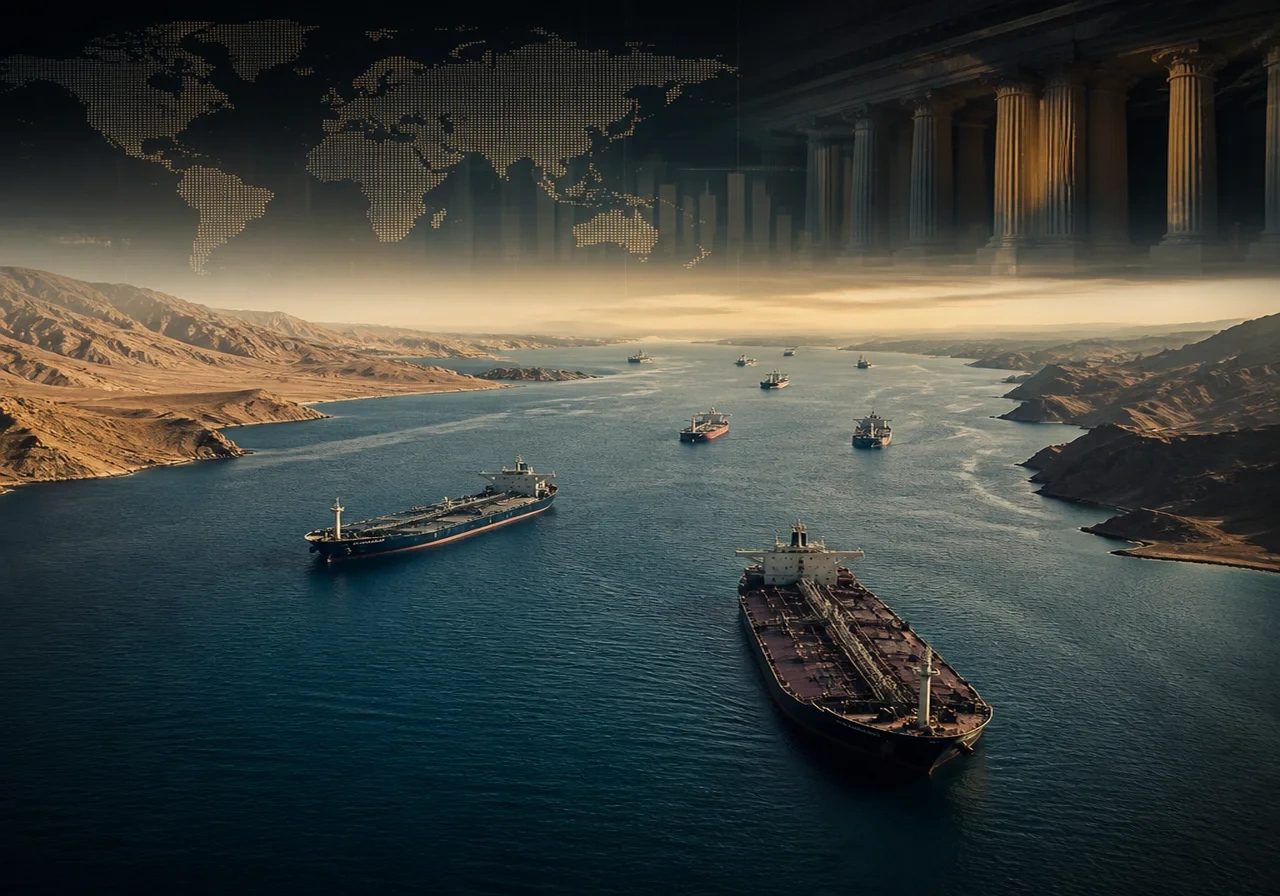
The Strait of Hormuz Disruption: A Chokepoint Under Siege
The Strait of Hormuz is only 21 nautical miles wide at its narrowest point — a squeeze of water that separates Iran from the Arabian Peninsula. For decades, energy analysts have called it the world’s most important oil artery. As we explained in our earlier analysis of hidden gas price risks, about 20% of global oil and a similar share of liquefied natural gas (LNG) pass through the strait each day. The International Monetary Fund pegs the figure even higher: between 25 and 30 percent of global oil and 20 percent of LNG depend on safe passage through those waters.
After the U.S.-led strikes began, Iran responded by threatening shipping and launching attacks on energy infrastructure in neighboring Gulf states. Tanker operators closed the book on routine crossings. The resulting effective closure, the International Energy Agency concluded, became the largest disruption to the global oil market in history. The shock was immediate: oil that once moved smoothly from Gulf loading terminals to Asian and European refineries suddenly faced expensive detours, delays, and enormous insurance premiums.
The numbers tell a stark story. The data table accompanying this article distills the conflict’s first-round effects, from the share of global energy supplies choked off to the sharp rise in jet fuel costs.
Oil Prices Above $100: The New Normal?
Before the war, Brent crude — the global benchmark — sat comfortably near $75. Within the first week of conflict, it smashed through the $100 ceiling. The psychological barrier mattered less than the physical reality: refiners in China, India, and Europe were bidding frantically to secure alternative barrels, while traders priced in the risk that the standoff could drag on for months.
“Market wisdom still holds that the war will end quickly, with the strait of Hormuz soon to reopen. Maybe the market is right, but in my opinion the risks are asymmetric that stagflation bursts the complacency bubble,” said Albert Edwards, a senior analyst at Société Générale.
Oil didn’t stay at its peak as ceasefire rumors and diplomatic signals tugged prices back down. But the underlying supply panic hasn’t disappeared. Even brief rallies have been violent: every round of shuttle diplomacy or Trump-sent tweet has swung crude by several dollars in a single session. The pattern reveals a market haunted by an unresolved question — what if the Strait stays closed for the rest of 2026?
As the data visualization below illustrates, the Strait of Hormuz disruption sits at the heart of the crisis, but the war’s economic reach extends into inflation, equity markets, and transportation networks in ways that go far beyond the price of a barrel.
Military Conflict Economic Effects: Inflation, Markets, and Supply Chains
The oil shock was merely the first domino. Because energy is baked into almost every good and service, the price surge acted like a sudden tax on fuel-importing economies. Eurozone inflation shot up to 3% in March, as the Guardian reported — well above the European Central Bank’s target — while European gas prices doubled, squeezing manufacturers and households already weary from the previous year’s cost-of-living pressures.
Global stock markets shuddered. The S&P 500, Wall Street’s benchmark index, fell 9.1% through late March as investors priced in the risk of a wider regional war and a global growth downgrade. Asian markets fared even worse: the Nikkei, heavily dependent on Gulf oil, suffered some of its deepest single-day declines at the onset of fighting. European indices such as the FTSE 100 and the German DAX also plummeted because of the continent’s heavy industrial reliance on energy imports.
In the months since, equities have seesawed wildly with each new diplomatic signal, as we documented in our coverage of the war’s impact on global markets. What has not recovered, however, are the real-world supply chains that keep the economy moving. Jet fuel prices have climbed more than 80% since the war started, according to Al Jazeera, forcing airlines into an abrupt retreat. U.S. budget carrier Spirit Airlines ceased operations entirely, blaming soaring fuel costs. Across the industry, airlines cut 9.3 million seats scheduled for June through September, and the International Air Transport Association warned of potential fuel shortages in parts of Europe and Asia.
For the flights that remained, fares leapt higher. The average international airfare from the United States across all destinations hit $1,101 in the last week of April — up 16% from the same period the year before. For travelers and for businesses that depend on just-in-time supply chains, the message was clear: the economic effects of this military conflict aren’t staying on a trading screen.
Defense Spending and Global Recession Risk
While households and airlines absorb higher energy bills, governments are preparing to spend more on defense — a shift that further complicates the economic outlook. European capitals, already under pressure to meet NATO budget targets, are accelerating arms purchases in response to the instability. Although official multiyear commitments are still being debated, the direction is unambiguous: defense spending will rise, diverting public funds from other priorities at the very moment that growth is cooling and social safety nets may be needed most.
The IMF has put the risks bluntly. In its March 2026 assessment, the fund warned that a prolonged Iran war could trigger a global recession. The closure of the Strait of Hormuz removes not only oil but also critical supplies of fertilizer and other commodities, tightening the vise on food prices in vulnerable economies across Africa and Asia. Central bankers are caught in the worst kind of bind: the energy shock stokes inflation and demands higher interest rates, yet the same shock is simultaneously killing growth and begging for easier money.
ECB President Christine Lagarde said the war has a “material impact” on inflation, and the bank’s financial stability report flagged the risk of a widening crisis (see our analysis of the ECB’s warning about the war triggering a financial crisis). Every additional week that the Strait of Hormuz remains closed raises the odds that this conflict morphs into a stagflationary storm — persistent inflation coupled with stagnant or shrinking economies — something the world hasn’t seen on this scale since the 1970s.
Conclusion
The Iran war has shattered the comfortable assumption that Middle Eastern conflicts remain local. By shutting the Strait of Hormuz, it lit a fuse under global oil prices, sent inflation higher, and forced airlines to ground planes it could no longer afford to fly. The shock has not spared any continent, and the most vulnerable countries are being squeezed hardest.
Financial markets have proven resilient in patches, buoyed by the enormous artificial intelligence investment boom. But the real economy — the one that pays wages, buys food, and flies families on holiday — is telling a different story. Jet fuel costs that are up more than 80%, Eurozone inflation at 3%, and 9.3 million fewer airline seats this summer are not abstract numbers; they are the tangible price of a prolonged energy disruption.
Until the Strait of Hormuz reopens, the world will be riding a knife’s edge between a short-lived price spike and a deep, prolonged recession. Policymakers and investors have no clear playbook for this scenario, and that uncertainty itself is arguably the most dangerous economic force of all.
Frequently Asked Questions
How does the Iran war affect global oil prices?
The Iran war has effectively closed the Strait of Hormuz, a chokepoint for 20-30% of global oil and 20% of liquefied natural gas. This severe supply disruption has pushed crude oil prices above $100 per barrel and doubled European gas prices, increasing costs for energy importers worldwide.
What is the Strait of Hormuz and why does it matter?
The Strait of Hormuz is a narrow waterway between Iran and the Arabian Peninsula. It is the world's most important oil transit chokepoint, with about 25-30% of global oil and 20% of LNG passing through. Its closure during the Iran war has caused the largest disruption to the global oil market in history, according to the International Energy Agency.
Could the Iran war cause a global recession?
Yes, the IMF and central banks have warned that prolonged conflict could trigger a global recession. The energy shock acts as a large tax on import-dependent economies, stoking inflation and denting growth. Higher defense spending and uncertainty further weigh on economic activity, with risks of stagflation rising.
How are airlines affected by the Iran war?
Jet fuel prices have risen more than 80% since the war began, leading airlines to hike fares and cut capacity. US carrier Spirit Airlines ceased operations, and globally, airlines have cut 9.3 million seats for summer 2026. The International Air Transport Association warns of potential jet fuel shortages in parts of Europe and Asia.
What are central banks doing in response to the Iran war?
The US Federal Reserve, ECB, and Bank of England have warned that the war will have a material impact on inflation and growth. The ECB specifically flagged risks to financial stability. Central banks are likely to maintain or adjust monetary policy cautiously, balancing inflation control against recession risks.