The Record Plunge: University of Michigan Consumer Sentiment Drops to an Unprecedented Low
The University of Michigan Consumer Sentiment Index, the longest-running survey of its kind, tumbled to 44.8 in May 2026 — the lowest reading since the poll first went into the field in 1952. The index, which is benchmarked to 1966:Q1=100, lost 5 full points from April’s revised 49.8, extending a slide that began early this spring as the military conflict in the Middle East escalated sharply. For context, a reading below 50 signals that households overwhelmingly see their financial situation deteriorating, and the current mark sits well beneath the trough reached during the 2008 financial crisis.
The steepness of the decline is what stands out. As Figure 1 shows — the line chart traces the index’s path from a modest 52.2 in May 2025 all the way to last month’s new low — the erosion has been rapid and broad. April already saw consumers growing noticeably more nervous, but May’s drop erased any remaining cushion, marking the single largest monthly fall in over two years. The data below, which pairs the sentiment reading with gasoline prices and inflation expectations, underscores just how deeply the cost-of-living shock is cutting.
The Cost of Living Crisis: How Rising Inflation Is Crushing Consumer Confidence
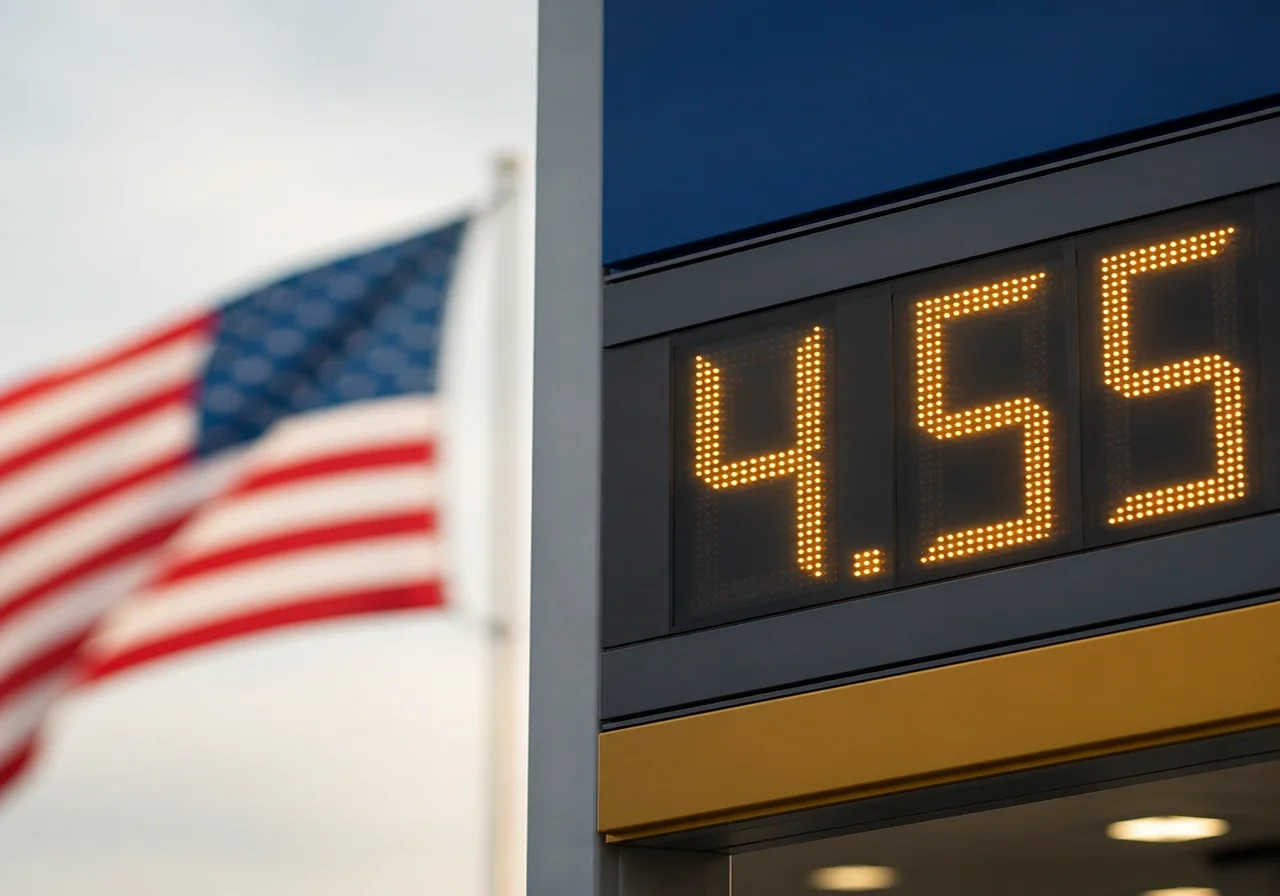
The immediate trigger for the collapse in confidence is impossible to miss: gasoline prices at the pump have surged more than 50% since February 28, the day before the Iran war began, reaching a national average of $4.552 per gallon in the latest survey week. For a typical household that fills up a 15-gallon tank twice a month, that translates to roughly $135 extra in monthly fuel costs — money that comes straight out of the grocery budget, the vacation fund, or the emergency savings that many families no longer have.

Spiking energy prices rarely stay confined to the service station, and this episode is no exception. The spike in fuel costs has not only hit consumers at the pump but also driven up transportation prices across the board, as we documented in the airline industry. Meanwhile, the fragmentation of global supply chains, which we examined earlier, adds a structural layer to price pressures. The combined effect is that ubiquitous everyday items — bread, milk, paper towels — now feel punishingly expensive even when the headline inflation numbers, which include many goods households buy only occasionally, look less alarming.
In May, 57% of consumers spontaneously mentioned high prices as eroding their personal finances, the highest share recorded in the survey’s inflationary episodes since the early 1980s. That kind of unprompted response tells you more about the mood than any index headline: people don’t need to be reminded that their money doesn’t go as far as it did six months ago; they feel it every time they swipe a debit card.
Who Feels It Most: The Shrinking Purchasing Power of Lower-Income Households
The pain is distributed unevenly. Households earning less than $50,000 a year report sentiment readings far below the national average, as do those without a college degree. These groups spend a larger share of their income on essentials — gasoline, food, utilities — leaving almost no room to absorb a sudden price shock. When purchasing power erodes at this pace, it hits the economically vulnerable first and hardest, forcing trade-offs between filling the tank and paying the electricity bill that higher-income families rarely face.
That growing disparity shows up in the survey’s measures of future expectations, where lower-income respondents have turned markedly more pessimistic about both their own finances and the broader economy. Younger adults, who carry less wealth to cushion day-to-day volatility, are also reporting a sharper deterioration in confidence than their parents’ generation. The narrative that inflation is a universal burden masks a reality in which the bottom half of the income ladder is being hollowed out at an alarming speed.
Inflation Expectations: The Fed Faces a Hard Choice
What keeps central bankers awake is not the backward-looking CPI but the forward-looking inflation expectations embedded in the University of Michigan survey. In May, consumers said they expect prices to rise 4.8% over the next year, a tick above April’s 4.7%. More troubling for the Federal Reserve, the five-to-ten-year outlook jumped to 3.9% — the highest level in seven months — up four-tenths of a percentage point in a single month.
A move of that size in long-run expectations is historically rare and usually signals that households are losing faith in the central bank’s ability — or willingness — to bring inflation back to its 2% target. Some Fed policymakers have recently acknowledged that they can no longer rule out additional rate hikes if these expectations continue to drift higher. The current federal funds rate of 3.50%–3.75% was meant to be restrictive enough to cool price pressures, but if firms and workers start embedding 4% inflation into their pricing and wage-setting decisions, that rate suddenly looks less effective. The dilemma is acute: raise rates to anchor expectations and risk tipping a decelerating economy into recession, or hold steady and watch the anchor slip.
Spending vs. Sentiment: The Paradox That Can’t Last
One of the most confusing features of the current data is that consumer spending has, so far, held up reasonably well. Tax refunds arrived on schedule, some households are still drawing down pandemic-era savings buffers, and a strong labor market has kept paychecks flowing. Retail sales have not collapsed, and at first glance the spending numbers seem to contradict the dire confidence readings.
But historically, a gap this wide between sentiment and actual outlays does not persist. When consumers feel as pessimistic as they do today, they usually pull back within a quarter or two — first on big-ticket items like cars and appliances, then on travel and dining, and eventually on everyday purchases. With the cost-of-living crunch leaving little room for error, and with inflation expectations now pointing upward, the spending resilience looks more like a lag than a permanent feature. If gasoline prices stay elevated through the summer driving season — and geopolitical realities suggest they will — the sentiment-spending paradox is likely to resolve in the direction of weaker demand.
Conclusion
The record-low consumer sentiment reading is not merely a statistical curiosity; it is a real-time signal of how deeply the rise in energy costs is reshaping household budgets and expectations. When 57% of consumers volunteer that high prices are hurting their finances, it reflects a loss of control that no amount of policy communication can easily reverse.
The risk ahead is that rising long-term inflation expectations become self-fulfilling, forcing the Federal Reserve to choose between a painful tightening cycle and letting price pressures become entrenched. Either path will test the resilience of American households, particularly those at the lower end of the income distribution who have already absorbed the brunt of the squeeze.
For now, the data suggests that the American consumer is holding on. But history reminds us that sentiment often leads spending, and the direction of travel — sharply lower confidence, still-elevated prices, and an uncertain global backdrop — offers few reasons for optimism in the months immediately ahead.
Frequently Asked Questions
What is the current US consumer sentiment index?
The University of Michigan Consumer Sentiment Index stands at 44.8 for May 2026, the lowest reading in the survey's history dating back to 1952.
Why did consumer sentiment fall to a record low?
The plunge is driven by surging gasoline prices—up over 50% since the Iran war began—and widespread anxiety about the rising cost of living. 57% of consumers spontaneously mention that high prices are eroding their personal finances.
How are inflation expectations changing?
Consumers expect inflation of 4.8% over the next year, up from 4.7% in April. Long-run expectations (5-10 years) rose to 3.9%, the highest in seven months, driven by Republican and independent respondents.
What does this mean for the Federal Reserve?
Rising inflation expectations complicate the Fed's path. While the Fed has held rates steady at 3.50%-3.75%, the data tests the claim that expectations remain anchored. Fed Governor Waller recently noted he can no longer rule out rate hikes if inflation persists.
Are consumers still spending despite low sentiment?
So far, consumer spending has held up, supported by tax refunds and savings drawdown. But economists warn that the cost of living crisis leaves little room for discretionary spending, and the gap between sentiment and spending is unlikely to persist.