The Inventory Picture: How Low Is Low?
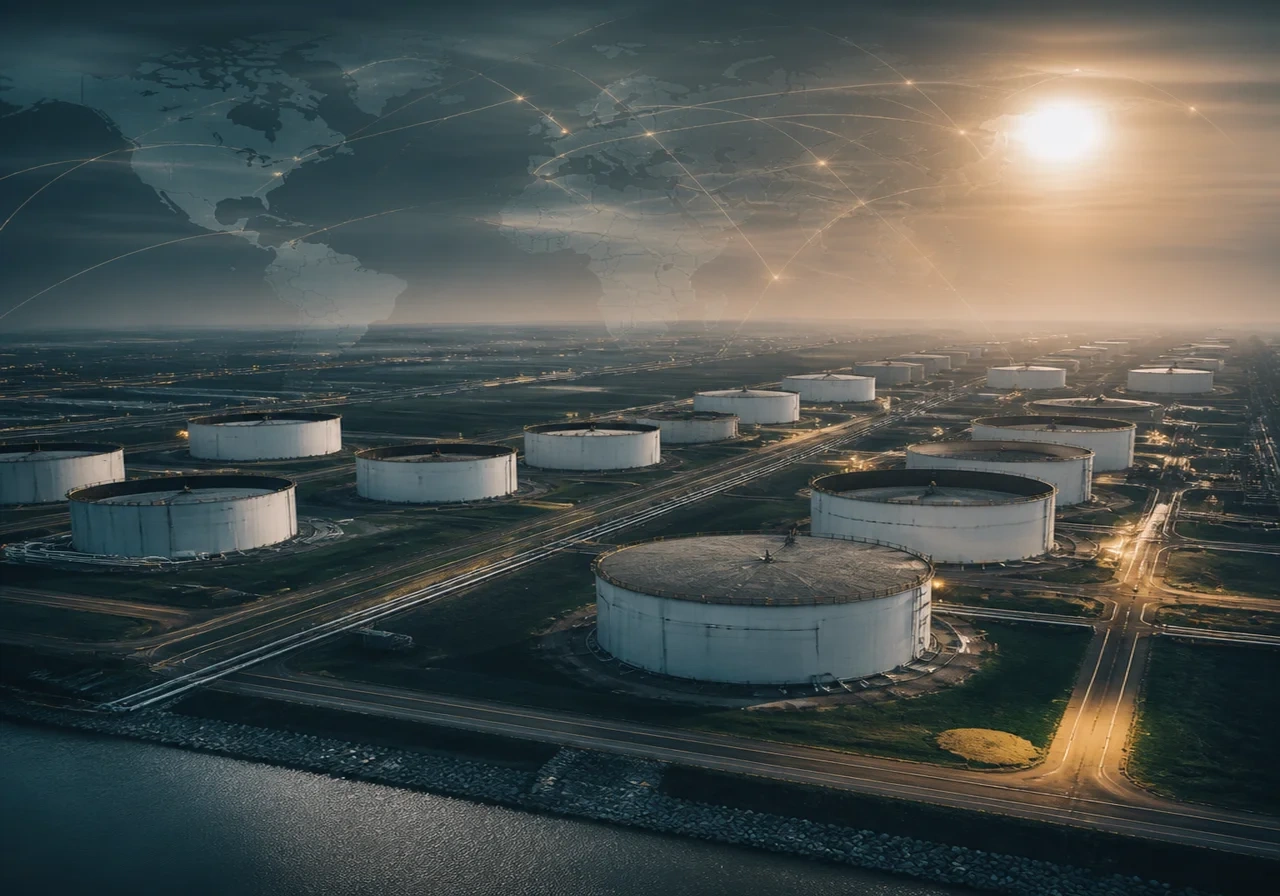
U.S. crude oil inventories have been declining steadily, and the situation is now perilously low. Headlines focus on the shrinking numbers—stocks dipping toward levels not seen in decades—but the real story lies beneath the surface. The inventory drawdown is a symptom of a wider crisis that has gripped global energy markets, one where a single chokepoint can send prices spiraling worldwide.
When oil tanks run low, refineries start to worry. They can’t just flip a switch and get more crude; tanker schedules, pipeline flows, and the delicate balance of global supply all come into play. Right now, that balance has been thrown violently off-kilter. The American draw isn’t happening in isolation. It’s being accelerated by events thousands of miles away, events that have upended the usual flow of petroleum from the Middle East.
Think of crude inventories like a savings account. In a normal month, deposits and withdrawals more or less match. But if a huge chunk of your income suddenly stops, you start burning through savings fast. That’s the position the U.S. finds itself in—not because demand has exploded overnight, but because the taps in a critical part of the world have been twisted shut.
The Strait of Hormuz Factor: A Chokehold on Oil Supply
The Strait of Hormuz is a narrow, 21-mile-wide passage separating Iran from Oman. Every day, tankers carrying roughly a fifth of the world’s seaborne oil squeeze through this bottleneck. When the U.S. and Israel launched strikes against Iran in early 2026, Tehran retaliated by mining the strait and effectively closing it. Suddenly, that massive artery of global trade was blocked.

Oil tankers were forced to reroute, adding weeks of transit time and sending freight costs soaring. Even now, with a tentative ceasefire on the table—a 60-day framework to demine and reopen the waterway—the disruption continues to ripple through markets. As one senior U.S. official noted, the deal remains unsigned, leaving the strait in a state of dangerous limbo. Supply uncertainty hasn’t gone away; it’s just been put on pause.
For U.S. refiners, the closure meant fewer barrels arriving from the Middle East. While America produces a lot of its own crude, the global market is interconnected. A squeeze anywhere pushes up prices everywhere. The inventory decline in the U.S. is a direct consequence of this sudden supply shortage, compounded by traders hoarding oil in anticipation of further disruptions.
Global Ripple Effects: Fuel Prices Spike Across Energy Markets
The pain of the Hormuz shutdown didn’t stay in the Gulf. It traveled directly to fuel pumps halfway around the world. In Australia, a country heavily reliant on imported refined products, the effect was immediate and brutal. Panic buying emptied service stations, and prices rocketed higher.
As the accompanying table shows, the national average retail price for petrol in Australia vaulted from 171 cents per litre to 238 cents in just four weeks—a 39% increase. In Sydney, diesel hit a record 314.5 cents per litre. Independent garages fared worst; one in Cairns reported that diesel was 85% more expensive than before the war began, and they had run out of unleaded entirely.
The Australian crisis was not purely a supply problem. Energy Minister Chris Bowen insisted that petroleum supply remained at the same level, but changing consumer behavior—drivers filling jerry cans, trucking companies ordering their fleets to top up at every opportunity—made the shortages feel far worse. The result was a textbook case of how quickly energy markets can seize up when fear takes hold.
This wasn’t just an Australian story. Similar price spikes rippled through Europe and Asia, proving that the world’s addiction to a handful of transit points leaves the entire energy system fragile.
What a US Crude Oil Inventories Decline Means for Your Wallet
So how does all of this land on American kitchen tables? Low oil inventories don’t just affect Wall Street traders. They filter down into the price of diesel that trucks use to deliver food, the jet fuel that powers flights, and the heating oil that keeps homes warm. A sustained drawdown raises the risk of sudden price shocks, and that uncertainty makes everything more expensive.
We’ve already seen how energy costs can push up grocery bills. As we reported in our analysis of soaring boxed beef prices, transportation fuel is a hidden driver that forces ranchers and retailers alike to charge more. When crude oil becomes scarce, the cost of moving goods from farm to fork rises, and those increases eventually hit consumers.
Moreover, higher fuel prices act like a tax on the entire economy. People spend more at the pump, leaving less for restaurants, entertainment, or savings. For businesses, fuel is a direct input cost that can’t be easily avoided. If crude inventories stay low heading into the summer driving season, the pressure on household budgets will become impossible to ignore.
The Bigger Picture: Petroleum Reserves and Energy Security in a Fragile World
The decline in American crude inventories is a flashing warning light about energy security. Petroleum reserves—both the commercial stocks reported weekly and the Strategic Petroleum Reserve held by the government—serve as a buffer against shocks. When those buffers shrink, the country becomes more vulnerable to supply disruptions, geopolitical blackmail, and price manipulation.
The current situation exposes a structural weakness. For decades, the world relied on the assumption that the Strait of Hormuz would always stay open. Now that assumption has been shattered. Even if a permanent ceasefire is reached, the memory of the closure will reshape energy policies. Countries may accelerate the build-up of alternative supply routes, invest in more storage, or push harder for a shift to electrification and renewables.
However, that transition takes time. In the near term, as we explored in our analysis of AI’s voracious energy appetite, demand for power is surging from data centers and digital infrastructure. That race to light up server farms is itself competing for energy resources, adding yet another layer of complexity to an already strained system. When crude oil supplies tighten, the tension between old-world fuel needs and new-world electricity demand becomes even more acute.
Low inventories aren’t just a statistic. They’re a measure of how little slack remains in a system that powers modern life. The oil price implications of this tightness are clear: any new shock, whether a hurricane in the Gulf of Mexico or a fresh escalation in the Middle East, could send prices to levels that test the resilience of economies worldwide.
Conclusion
The decline in U.S. crude oil inventories is alarming, but it is only the most visible part of a much deeper problem. The closure of the Strait of Hormuz exposed the brittleness of global supply chains, turning a regional conflict into a worldwide price shock. While the focus remains on the numbers in storage reports, the true vulnerability lies in the lack of easily accessible alternatives when a key route is blocked.
For everyday Americans, the message is not to panic but to pay attention. Low inventories mean that energy prices will remain sensitive to news headlines, and the risk of sudden increases at the pump is higher than it has been in years. The knock-on effects for food costs, transportation, and overall inflation are real and already beginning to surface.
Ultimately, the story of low inventories is a story of interdependence. No country, not even one as resource-rich as the United States, can isolate itself from disruptions that happen in a narrow waterway thousands of miles away. Building resilience—through diversified supply, larger emergency stocks, and a faster transition to alternatives—will be the challenge of the coming decade. Until then, we’ll keep watching the tanks, because every barrel drawn down tells a story of a world still very much tied to a fragile energy backbone.
Frequently Asked Questions
Why are US crude inventories declining?
US crude inventories are declining due to a combination of factors: reduced domestic production from depleted reserves, increased exports, and most critically, supply chain disruptions caused by the closure of the Strait of Hormuz after the US-Israel attack on Iran. This has tightened global oil availability and forced countries to draw down strategic reserves.
How does the Strait of Hormuz affect oil prices?
The Strait of Hormuz is a narrow waterway through which about 20% of the world's oil passes. Its closure in early 2026 due to the Iran conflict cut off a major supply route, causing oil prices to spike. Even with potential ceasefires, the instability keeps markets on edge, preventing prices from falling back to pre-crisis levels.
What is the impact of low crude inventories on the US economy?
Low crude inventories raise the risk of price volatility and potential fuel shortages. This can lead to higher gasoline prices, increased transportation costs, and inflationary pressure across the economy. It also weakens energy security, making the US more vulnerable to supply disruptions.
Is the current oil price surge just about inventories?
No, the surge is driven by multiple factors beyond inventories: geopolitical tensions (Iran, Venezuela), production cuts by OPEC+, and speculative trading. The inventory drawdown is a symptom of deeper supply concerns, but prices are also inflated by fear and market positioning.